
Choosing between a turbine engine and a piston engine is one of the most important decisions you'll encounter in aviation, whether you're selecting training aircraft, planning a career training path, or understanding the aircraft you'll fly. Turbine engines (including turboprops) and piston engines serve different operational needs, with turbines excelling at higher altitudes and speeds while piston engines offer superior fuel efficiency and lower costs for shorter, lower-altitude flights. In 2023, nearly 1,700 piston aircraft and over 600 turboprop aircraft were delivered globally, demonstrating that both technologies remain vital to modern aviation. Understanding the fundamental differences between these propulsion systems will help you make informed decisions about your flight training and aviation flight training career.
Key Takeaways
- Turbine engines (turboprops and jets) are more reliable, require less frequent maintenance, and excel at high-altitude operations, but cost roughly twice as much to acquire
- Piston engines are more fuel-efficient at lower altitudes, cost less upfront, and remain the standard for flight training and general aviation
- Time Between Overhaul (TBO) for turbines ranges from 3,500-5,400 hours compared to 1,400-2,000 hours for pistons
- Turboprops consume about 50% more fuel than comparable pistons but deliver superior speed, altitude capability, and operational flexibility
Ready to start your pilot training and experience both engine types firsthand? Get started with Hillsboro Aero Academy's training programs.
What Is a Piston Engine and How Does It Work?
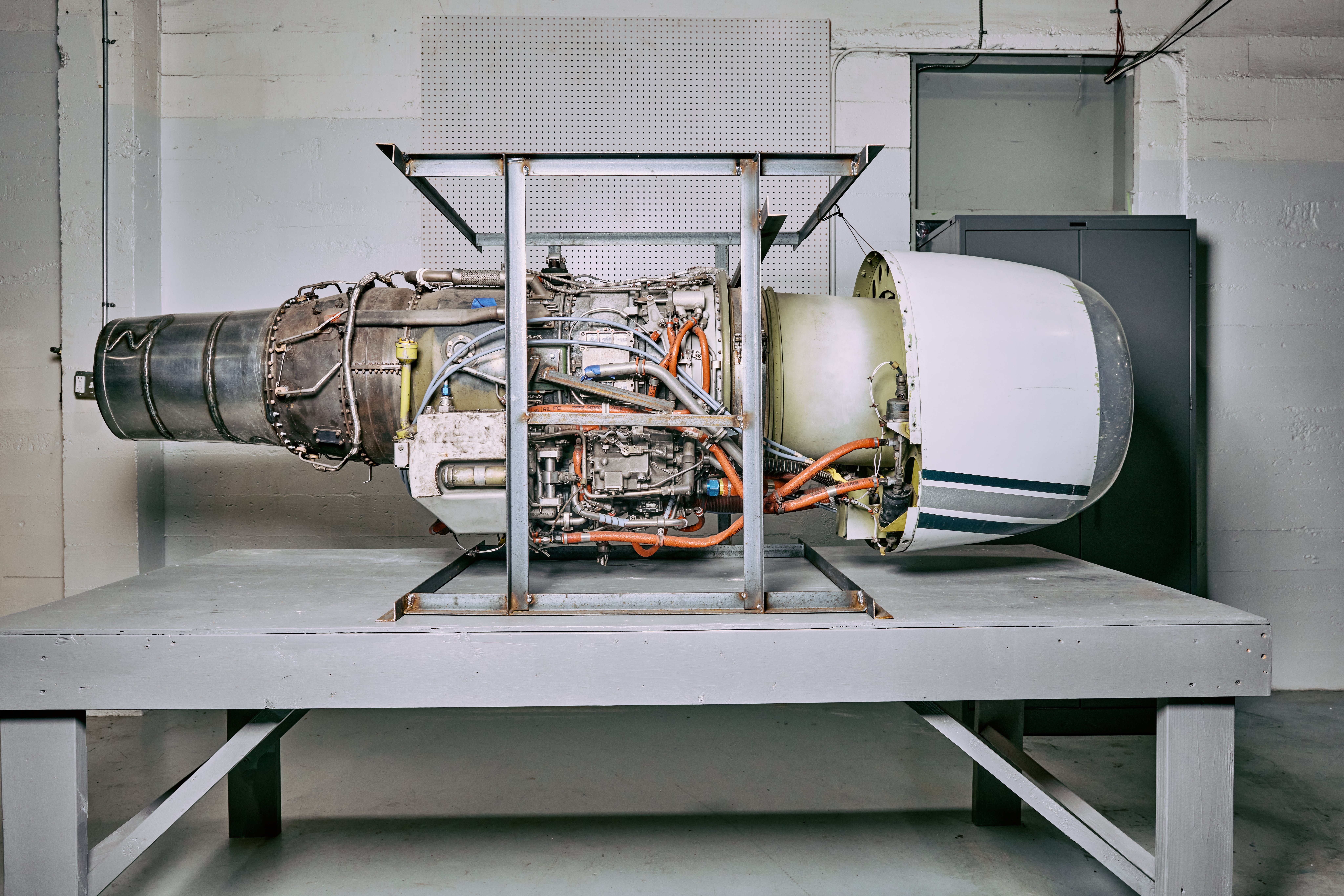
A piston engine operates through a reciprocating cycle, similar to the engine in your car. The engine typically features four to six cylinders arranged in a horizontally opposed configuration.
Each cylinder completes a four-stroke cycle: intake, compression, power, and exhaust. During the intake stroke, the piston moves downward and draws in a mixture of air and fuel. The compression stroke follows as the piston moves upward, compressing the mixture to create optimal combustion conditions.
Spark plugs ignite the compressed fuel-air mixture, causing an explosion that forces the piston downward and generates mechanical power. The exhaust stroke then expels burned gases through an open valve, and the cycle repeats. This reciprocating motion ultimately turns the propeller to create thrust.
Piston Engine Complexity and Components
Piston engines contain significant mechanical complexity despite their proven reliability. A typical aircraft piston engine comprises at least 260 separate parts including rods, pistons, valves, lifters, camshafts, bearings, timing chains, and belts.
These components move in multiple directions (left, right, forward, back, up, and down) to produce power. Most general aviation aircraft use air-cooled piston engines that rely on magnetos for ignition, representing mature and well-established technology.
Popular piston engine models like the Lycoming O-360 and Continental O-470 trace their design lineage back to the 1950s and 1960s. This proven heritage enables manufacturers to continuously improve reliability through better metallurgy, manufacturing processes, and lubrication technologies.
What Is a Turbine Engine and How Does It Work?
A turbine engine represents a fundamentally different approach to converting fuel into mechanical power. In aviation, turbine engines come in several forms: turboprops, turbojets, and turbofans.
Turboprop engines combine jet engine principles with propeller propulsion, offering an ideal balance for regional and utility aviation. Compressed air enters the engine and mixes with fuel in a combustion chamber where ignition creates high-speed exhaust gases.
These hot gases flow through a power turbine, causing it to spin at extremely high speeds (often exceeding 45,000 rpm). The turbine connects to a reduction gearbox that slows this rotation down to speeds suitable for propeller operation, typically around 1,500-2,000 rpm.
Turbine Engine Simplicity vs Sophistication
The mechanical elegance of turbine engines becomes apparent when examining component counts. The Pratt & Whitney PT6A gas turbine engine, which powers many turboprop aircraft, features only about 10 moving parts (contains very few major moving assemblies) , all rotating in the same direction, with no reciprocating components.
This represents far greater mechanical simplicity compared to piston engines with 260+ reciprocating components. However, turbines operate at much higher temperatures and rotational speeds, requiring construction from heat-resistant materials and extremely precise balancing.
Turbine engines produce smooth, continuous power output compared to the reciprocating motion of pistons. This inherent smoothness reduces vibration and improves passenger comfort, particularly in larger aircraft.
Turbine Engine vs Piston Engine: Direct Comparison
|
Feature |
Piston Engine |
Turbine Engine (Turboprop) |
|
Moving Parts |
260+ components |
~10 components ~10 major rotating assemblies |
|
Fuel Type |
Aviation gasoline (Avgas) |
Jet fuel (Jet-A) |
|
Time Between Overhaul |
1,400-2,000 hours |
3,500-5,400 hours |
|
Cruise Speed |
~150 knots |
~300 knots |
|
Optimal Altitude |
5,000-12,000 feet |
18,000-30,000 feet |
|
Fuel Efficiency |
Better at lower altitudes |
Better at higher altitudes |
|
Acquisition Cost |
Lower (baseline) |
~2x piston cost |
|
Maintenance Frequency |
More frequent checks |
Longer intervals, phase inspections |
|
Reliability |
Proven, maintenance-dependent |
Superior, less prone to failure |
Fuel Efficiency: Where Each Engine Type Excels
Understanding fuel efficiency requires examining how each engine type performs across different operating conditions. Piston engines achieve remarkable fuel economy at lower altitudes and slower speeds.
At their optimal altitude range of 5,000 to 12,000 feet, piston engines deliver superior specific fuel consumption, making them cost-effective for short regional flights and training operations. The piston engine's specific fuel consumption averages approximately 0.43 pounds per horsepower-hour.
Turboprop engines demonstrate better efficiency at higher altitudes and faster speeds, particularly between 250 and 350 knots. At these speeds and at altitudes above 18,000 feet, the turboprop's thermal efficiency and power output create significant advantages.
Real-World Fuel Consumption Examples
The Piper Meridian turboprop burns approximately 31 gallons per hour at cruise compared to 20 gallons per hour for the Piper Mirage piston aircraft. While this represents roughly 50% higher fuel consumption, the turboprop delivers substantially greater speed and altitude capability. While this represents a significantly higher fuel flow, the turboprop delivers substantially greater speed and altitude capability.
The extra fuel burn also reflects that jet fuel is 13% heavier than avgas, meaning the Meridian must carry more fuel weight (150 gallons versus 120 gallons) to achieve a reasonable range. When evaluating fuel efficiency, pilots and operators must consider the complete mission profile, not just fuel flow rates.
For operations frequently flying at higher altitudes or covering longer distances, the turboprop's speed advantages often offset higher fuel consumption. For local training flights and shorter cross-country trips, piston engines maintain clear economic advantages.
Altitude Performance and Operating Envelopes
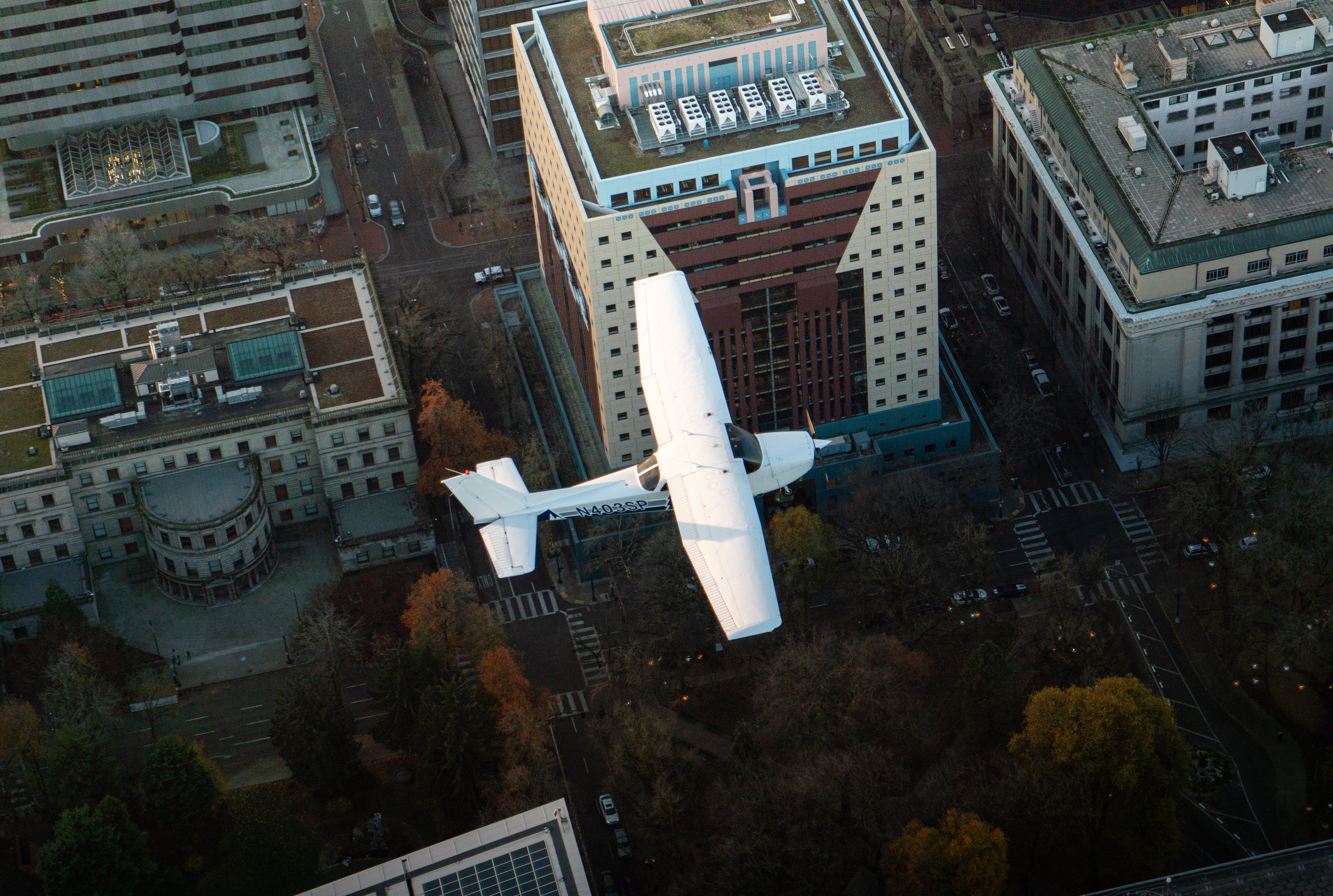
The performance envelope accessible to each engine type reveals fundamental operational differences. Piston engines experience significantly reduced performance at higher altitudes due to decreasing air density, which directly reduces oxygen available for combustion.
As altitude increases, naturally aspirated piston engines lose power output proportionally. This characteristic makes piston engines less effective above 10,000-12,000 feet unless equipped with turbochargers or superchargers.
Turboprop engines excel at high altitudes because their turbocompressor design continuously supplies compressed air to the combustion chamber, even as external air density decreases. This enables turboprops to maintain power output well into the flight levels above 20,000 feet.
Power-to-Weight and Climb Performance
Turboprop engines demonstrate superior power-to-weight ratios compared to piston engines. This advantage translates directly into better climb rates and contributes to improved high-altitude performance. overall speed performance at altitude.
The Piper Meridian turboprop performs best in the flight levels above 20,000 feet, where thin air and smooth conditions enable efficient high-speed cruise. Piston-powered aircraft don't suffer the same efficiency losses when operating at lower altitudes where weather and terrain considerations often require flight.
For very long distances, turboprop speed advantages become significant. However, piston aircraft remain ideal for shorter regional routes, flight training, and operations from airports where high-altitude capability isn't required.
Maintenance Requirements and Reliability
Maintenance profiles differ substantially between piston and turbine engines, impacting both operating costs and aircraft availability. Piston engines require more frequent maintenance despite their mechanical simplicity.
Regular maintenance includes checks on spark plugs, cylinders, valves, and oil systems. Oil changes occur every 35-40 hours at costs approaching $3,400 per service for some aircraft. Annual or 100-hour inspections are mandatory under FAA regulations.
Turbine engines require less frequent routine maintenance but involve more complex inspection procedures when service is needed. Compared to piston engine overhaul times of 1,400-2,000 hours, turbine engines typically have overhaul times of 3,500-5,400 hours.
Phase Inspections and Hot Section Overhauls
Turbine engines require additional maintenance events between overhauls. Phase inspections (typically four to six phases) occur at regular intervals, along with hot section inspections that examine the combustion chamber and turbine sections.
The hot section experiences extreme temperatures and stress, requiring periodic inspection and refurbishment. However, modern turboprops like the PT6A can avoid expensive hot-section overhauls if electronic trend-monitoring systems are installed and indicate healthy engine performance.
Monitoring and recording engine data during operation dramatically improves reliability for both engine types. Approximately 70% of power-loss accidents are attributed to improper maintenance or inspection that could have been prevented with aggressive training programs and trend monitoring.
If you're interested in learning how to maintain these complex systems, explore opportunities in aviation maintenance and technical career training.
Operating Costs: Beyond Fuel Consumption
Operating costs extend far beyond fuel to encompass engine reserves, insurance, and acquisition expenses. The Piper Mirage piston single had a list price just over $1 million, while the Piper Meridian turboprop sold for almost exactly double that figure.
This 2:1 acquisition cost ratio has remained relatively stable and reflects the premium for turboprop capability. The higher acquisition cost creates barriers for private pilots and small operators, making piston aircraft the default choice for entry-level general aviation.
However, turboprop operators benefit from longer time between overhauls and reduced maintenance frequency. For operations flying 250-340 hours annually, the equation often favors turboprops despite higher fuel consumption.
This approximate 2:1 cost ratio has remained broadly consistent over time and continues to create barriers for private pilots and small operators, making piston aircraft the default entry point into general aviation. However, turboprop operators benefit from longer time between overhauls and reduced maintenance frequency. For operations flying 250-340 hours annually, the equation can favor turboprops, particularly when speed and high-altitude performance provide operational value.
Insurance and Financing Considerations
Turbine aircraft often require specialized insurance and financing arrangements. Lenders commonly require earnest money deposits for turbine purchases due to the additional due diligence involved.
Pre-purchase inspections on turbine aircraft are more complex and expensive, requiring detailed review of maintenance history and service schedules. Many turbine aircraft qualify for registration under international financing conventions, adding legal complexity.
Turbine operations often require professional crew management, particularly for business aviation applications. It's common for the aircraft owner not to serve as pilot-in-command, requiring additional operational oversight and training management.
Aircraft Deliveries and Market Trends
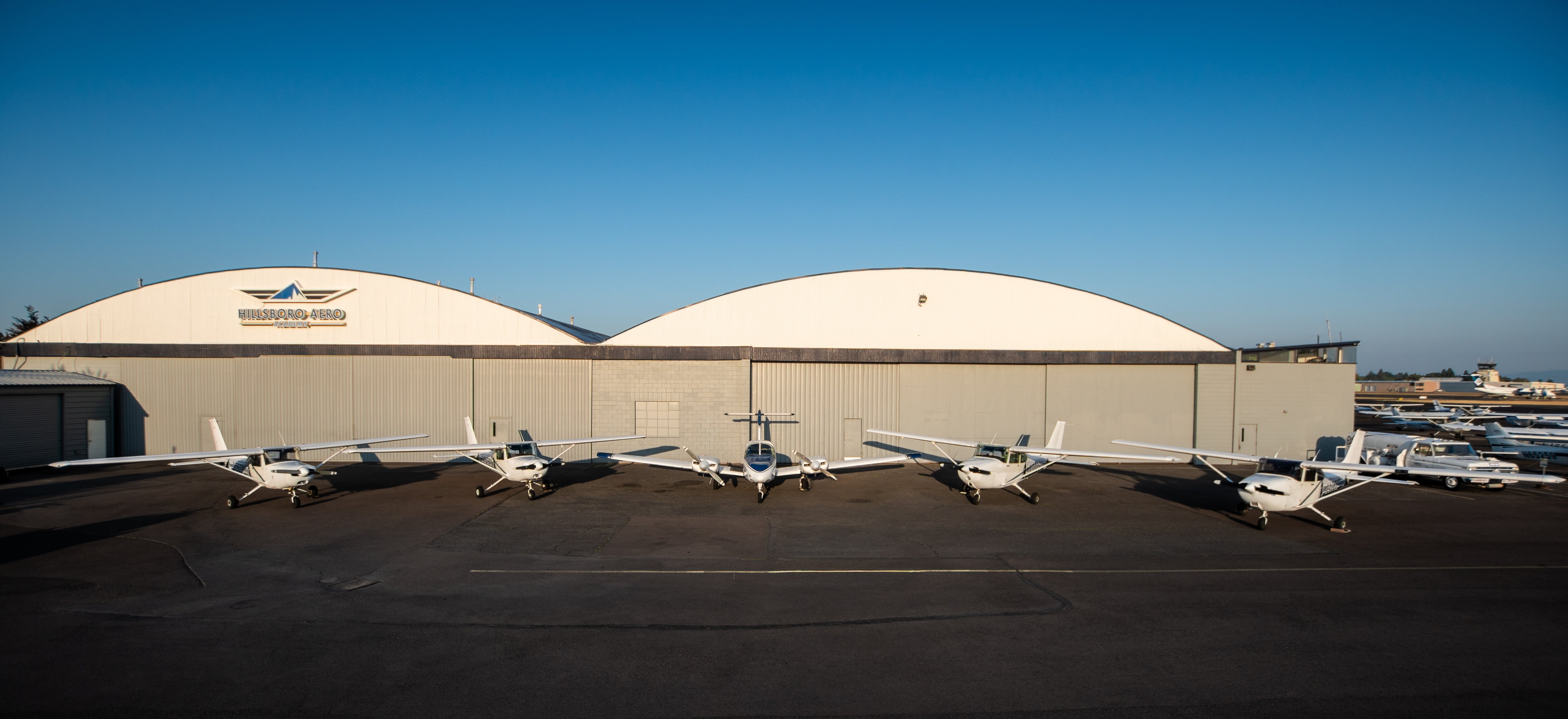
The aviation marketplace demonstrates robust demand for both piston and turboprop aircraft, with distinct growth patterns. In 2023, nearly 1,700 piston-engined aircraft were sold, with popular examples including the Cirrus SR22, Cessna Skyhawk, and Piper Pilot.
These aircraft range from high-performance singles to proven trainers serving flight schools worldwide. Piston airplane deliveries rose 11.4% in the first half of 2023 compared to the same period in 2022.
Over 600 private turboprop aircraft were sold in 2023, with the Pilatus PC-12, TBM 900 series, and Beechcraft King Air leading sales. Turboprop deliveries increased 17.4% in the first half of 2023, outpacing piston growth rates.
Commercial Turboprop Operations
In commercial aviation, the turboprop segment is heavily dominated by ATR-72s and De Havilland Dash 8s. These aircraft serve regional routes where fuel efficiency at cruise altitudes between 15,000-25,000 feet translates to lower per-seat costs.
Approximately 34% of airports globally rely exclusively on turboprop aircraft for operations, highlighting their critical role in connecting remote and underserved regions. The versatility of turboprop aircraft allows operation from short runways, unpaved surfaces, and in extreme weather conditions.
The global turboprop demand is expected to reach 2,100 aircraft by 2044, with the first decade focusing on fleet replacement and the following decade on growth. This sustained demand reflects the operational and economic advantages turboprops provide for appropriate missions.
Pilot Training Implications
The transition from piston to turboprop aircraft introduces significant operational complexity beyond simple power management changes. Turboprops are high-performance aircraft requiring specific certification, skill levels, and recurrent training for safe operation.
Most professional pilots begin training in piston aircraft before transitioning to turbine equipment. This progression allows students to master fundamental flying skills before adding the complexity of turbine systems.
Piston aircraft operations emphasize manual mixture control, propeller management, and continuous monitoring of engine parameters. These skills build excellent pilot technique and systems understanding.
Turboprop Operational Differences
Turboprop operations simplify some aspects of power management, as thrust levers typically serve as the only power controls. Pilots don't need to manage mixture or manually adjust propeller pitch in most turboprops. As thrust levers typically control engine output, eliminating the need for mixture management or manual propeller pitch adjustments.
However, turboprops introduce greater system complexity through pressurization, sophisticated electrical systems, and advanced avionics. Emergency procedures become more complex, requiring thorough understanding of multiple interconnected systems.
Many pilots begin their journey with private pilot training in piston aircraft before advancing to commercial operations in turboprops. This logical progression builds skills incrementally while managing training costs effectively.
Additional training requirements for turboprop operations often include high-altitude endorsements, complex aircraft endorsements, and type-specific training for larger turboprops. Insurance companies frequently mandate minimum flight hours and recurrent training for turbine operations.
Helicopter Applications: Piston vs Turbine
The piston versus turbine comparison extends into rotary-wing aviation, where similar trade-offs exist. Piston helicopters offer lower operating costs and more forgiving flight characteristics compared to turbine helicopters.
Turbine helicopters provide superior performance, higher power-to-weight ratios, and the reliability required for demanding commercial operations. Emergency medical services, offshore operations, and firefighting almost exclusively use turbine helicopters.
Piston helicopters serve well for flight training, personal transportation, and light utility work. They operate at lower altitudes and generally require less specialized maintenance infrastructure.
The Robinson R22 and R44 represent the most common piston training helicopters. These aircraft introduce students to helicopter flight dynamics before transitioning to turbine equipment like the Robinson R66 or Airbus H125.
If you're considering helicopter pilot training, understanding engine types will help you plan your career path and training progression.
Environmental Considerations
Environmental sustainability increasingly influences aircraft and engine selection decisions. Turboprop aircraft demonstrate significant environmental advantages over regional jets on appropriate routes.
ATR turboprop aircraft consume up to 45% less fuel and emit 45% less CO2 per trip than regional jets, saving approximately 4,400 tonnes of CO2 per aircraft annually. This environmental advantage makes turboprops attractive to environmentally conscious airlines and regulators.
Sustainable Aviation Fuels (SAF) represent a significant opportunity for emissions reduction. Research indicates that current SAF can reduce CO2 emissions by up to 80% over its lifecycle compared to conventional jet fuel.
Lead in Aviation Gasoline
Piston engines face unique environmental challenges related to aviation gasoline. Most piston aircraft operate on 100LL (low-lead) avgas, which contains tetraethyl lead to prevent engine knock.
The FAA's EAGLE initiative (Eliminate Aviation Gasoline Lead Emissions) targets complete elimination of leaded aviation fuels by 2030. This transition requires development of suitable unleaded alternatives and potential engine modifications.
Several unleaded aviation fuel candidates have received FAA approval, including GAMI's G100UL and Swift Fuels' 100R. The industry continues working toward fleet-wide unleaded fuel authorization to address environmental and health concerns.
Which Engine Type Is Right for Your Goals?
Selecting between piston and turbine engines depends on your specific aviation goals, mission requirements, and budget constraints. For most aspiring pilots, piston aircraft represent the ideal starting point.
Flight training programs use piston aircraft because they offer lower operating costs, proven reliability, and excellent platforms for learning fundamental skills. Students master basics of power management, aircraft systems, and flight operations without the complexity of turbine systems.
As you progress toward commercial pilot certification and airline careers, you'll naturally transition to turbine-powered aircraft. Many regional airlines operate turboprop aircraft, providing excellent opportunities for building flight experience.
Career Path Considerations
If your goal is flying for major airlines, you'll eventually operate turbofan jets. However, the progression typically begins with piston trainers, (such as the Cessna 152, Cessna 172 and Seminole Piper) advances to piston complex aircraft, then moves to turboprops before transitioning to jets.
Business aviation careers may involve turboprop operations throughout your career, as many corporate operators prefer turboprop economics and airfield flexibility over jet speed. Agricultural aviation, survey work, and utility operations frequently use both piston and turbine aircraft depending on specific mission requirements.
Understanding different types of pilot licenses will help you plan your training progression and career development. Each rating and certificate builds on previous experience, creating a logical pathway from student pilot to airline captain.
The Future of Piston and Turbine Technology
Both piston and turbine technologies continue evolving through materials advancements, digital engine controls, and alternative fuel development. Modern piston engines incorporate advanced materials, improved fuel injection, and sophisticated engine monitoring.
Diesel piston engines burning jet fuel have emerged in aircraft like the Diamond DA42 and DA62. These engines offer extended maintenance intervals and the ability to operate on globally available jet fuel.
Hybrid-electric propulsion systems represent an emerging technology with potential to transform regional aviation. Developers are exploring hybrid turboprop configurations that combine battery power with conventional turbines to reduce fuel consumption and emissions.
Sustainable Aviation's Role
The aviation industry has committed to net-zero carbon emissions by 2050. This goal drives development of sustainable aviation fuels, hydrogen propulsion, and electric aircraft.
Turboprop engines are already compatible with sustainable aviation fuel blends up to 50%, with 100% SAF approval anticipated within the next few years. Piston engine compatibility with alternative fuels remains under development.
Electric aircraft technology progresses steadily, though battery energy density limitations currently restrict applications to short-range training missions. As battery technology improves, electric propulsion may eventually supplement or replace piston engines for specific applications.
Frequently Asked Questions
What is the main difference between a turbine engine and a piston engine?
The main difference is how they generate power. Piston engines use reciprocating pistons in cylinders with spark ignition, while turbine engines use continuous combustion to spin turbine blades. Turbines have fewer moving parts (around 10) compared to pistons (260+ parts), operate on jet fuel instead of avgas, and excel at higher altitudes and speeds.
Are turbine engines more reliable than piston engines?
Yes, turbine engines are generally more reliable than piston engines. Turbines require less frequent maintenance and have longer time between overhauls (3,500-5,400 hours versus 1,400-2,000 hours for pistons). The continuous rotational motion of turbines produces less wear than reciprocating piston motion, and turbines are built to withstand harsh conditions in commercial operations.
Why do flight schools use piston engine aircraft?
Flight schools use piston engines because they offer lower operating costs, proven reliability, and excellent training platforms. Piston aircraft cost less to acquire and operate, making them affordable for students and schools. They also teach fundamental power management skills including mixture control and engine monitoring that build strong pilot technique.
Do turboprop engines use jet fuel or aviation gasoline?
Turboprop engines burn jet fuel (Jet-A or Jet-A1), not aviation gasoline. This is a significant advantage because jet fuel is available at most airports worldwide, costs less than avgas in many locations, and doesn't contain lead. Piston engines use aviation gasoline (100LL), which contains lead and has more limited availability internationally.
Can piston engine aircraft fly at high altitudes?
Piston engines can fly at high altitudes but perform poorly compared to turbines. As altitude increases, decreasing air density reduces oxygen available for combustion, dramatically reducing piston engine power. Most piston aircraft operate optimally between 5,000-12,000 feet, while turboprops excel between 18,000-30,000 feet where their turbocompressor design maintains power output. Turboprop aircraft excel between approximately 18,000 and 30,000 feet because their turbine-driven compressor systems maintain effective power output despite decreasing air density.
What is a hot section inspection on a turbine engine?
A hot section inspection examines the combustion chamber and turbine sections of a gas turbine engine. These components experience extreme temperatures and stress during operation. The inspection occurs between major overhauls to assess wear, check for cracks or damage, and replace life-limited parts. Hot section inspections help maintain reliability and prevent in-flight failures.
Why do turbine conversions cost so much?
Turbine conversions are expensive because they require extensive aircraft modifications, STC approval, and turbine engine acquisition. A turbine conversion typically involves replacing the entire engine, modifying the engine mount, upgrading fuel systems, installing new engine instruments, and updating electrical systems. The turbine engine itself costs significantly more than a piston engine, and engineering/certification expenses add substantially to total project costs.
Do many jet engines work the same as turboprop engines?
Jet engines and turboprop engines share the same basic gas turbine cycle but apply power differently. Both compress air, mix it with fuel, ignite the mixture, and expand gases through turbines. However, turboprops extract maximum power through the turbine to drive a propeller, while jets (turbofans) prioritize high-velocity exhaust thrust. Turboprops are more efficient at lower speeds; jets excel at high speeds.
What additional training is needed to fly turbine aircraft?
Turbine aircraft require type-specific training, high-altitude endorsements, and often insurance-mandated minimums. Pilots must complete ground school covering turbine systems, emergency procedures, and performance characteristics. Flight training includes normal operations, emergency procedures, and approaches. Many turbines require recurrent training every 6-12 months, and insurance companies often mandate minimum flight hour requirements and annual proficiency checks.
How does combustion differ between piston and gas turbine engines?
Piston engines use intermittent combustion with spark ignition, while gas turbine engines use continuous combustion. In pistons, the combustion chamber (cylinder) alternates between intake, compression, power, and exhaust strokes, with combustion occurring only during the power stroke. Turbines maintain constant combustion in a dedicated combustion chamber, with fuel continuously injected and burned to produce steady gas flow through the turbine.
Start Your Aviation Journey Today
Understanding the differences between turbine engines and piston engines is just the beginning of your aviation education. Whether you dream of flying turboprop regional airliners, piloting business aircraft, or building flight hours toward a major airline career, your journey begins with quality flight training.
Hillsboro Aero Academy offers comprehensive training programs in both piston and turbine aircraft, preparing students for careers in aviation. We also offer our Aviation Maintenance Professional Program, which prepares you with the technical knowledge, hands-on skills, and FAA exam readiness needed to test for certification as an Airframe & Powerplant (A&P) mechanic. Our experienced instructors, modern fleet, and proven curriculum have helped thousands of pilots from over 75 countries achieve their goals.
Ready to begin your pilot training and experience these engine types firsthand? Contact Hillsboro Aero Academy today to learn more about our airplane and helicopter programs, or explore our commercial pilot training courses to start planning your path to a professional aviation career.
__
This article presents a general overview of the field of aviation, including job opportunities within that field; it does not describe the educational objectives or expected employment outcomes of a particular Hillsboro Aero Academy program. Hillsboro Aero Academy does not guarantee that students will obtain employment or any particular job. Some positions may require licensure or other certifications. We encourage you to research the requirements for the particular career you desire.