
Translational lift is the increased rotor efficiency that occurs when a helicopter transitions from hover into directional flight, with the most significant improvement happening between 16-24 knots of airspeed. At this threshold, called effective translational lift (ETL), the rotor system completely outruns its recirculating vortices and begins operating in clean, undisturbed air. This aerodynamic phenomenon fundamentally changes how the helicopter performs, requiring less power to maintain altitude while producing more lift. Understanding translational lift is essential for every helicopter pilot, as it affects takeoff procedures, landing approaches, power management, and emergency operations across all phases of flight.
Key Takeaways
- Translational lift begins when the rotor system moves into undisturbed air during forward flight, increasing efficiency progressively with airspeed
- Effective translational lift (ETL) occurs between 16-24 knots when the rotor completely outruns its own downwash
- Pilots experience noticeable aircraft responses at ETL, including reduced power requirements, attitude changes, and altered pedal inputs
- Proper management of translational lift phases is critical for safety during takeoffs, landings, and confined area operations
Ready to master the aerodynamics of helicopter flight? Start your helicopter pilot training journey with Hillsboro Aero Academy today.
The Physics Behind Translational Lift
The rotor system of a helicopter generates lift by accelerating air downward through the rotor disc, creating thrust that supports the aircraft's weight. During a stationary hover, the rotor operates in its own recirculated air, with downwash flowing beneath the disc and vortices rolling up at the blade tips. These vortices create a turbulent wake that reduces rotor efficiency, requiring significant power to maintain altitude.
When the helicopter begins moving horizontally—whether through forward flight, sideward motion, or wind—the rotor disc encounters cleaner air. The recirculating vortices get pushed behind the aircraft rather than remaining beneath the rotor. This transition into undisturbed air progressively increases rotor efficiency, a phenomenon pilots call translational lift.
According to the FAA Helicopter Flying Handbook, this improvement in rotor performance results from the changing airflow pattern through the rotor system. As the helicopter accelerates, the induced flow (downward air movement through the disc) decreases relative to the horizontal airflow component. The rotor blades experience a more favorable angle of attack, generating more lift for the same amount of power.
The relationship between airspeed and rotor efficiency isn't linear. Small increases in speed during hover produce modest efficiency gains. However, at a specific airspeed threshold—typically between 16 and 24 knots depending on rotor blade size, disc area, and RPM—the rotor achieves a critical transition point where it completely outruns its vortex system. This is effective translational lift.
Understanding Effective Translational Lift (ETL)
Effective translational lift represents the speed at which the main rotor system transitions from operating in disturbed, recirculating air to working in relatively clean, undisturbed air. This threshold varies slightly between helicopter types but generally occurs between 16-24 knots of airspeed. At ETL, the flow of air through the rotor system becomes more horizontal rather than vertical.
The rotor disc no longer sits within its own downwash. Instead, the vortices trail behind the aircraft, and clean air passes through the rotor from front to rear. This dramatically improves the efficiency of the rotor system, reducing the power required to maintain altitude while simultaneously increasing the lift produced.
Pilots experience ETL as a distinct set of aircraft responses. The helicopter tends to pitch nose-up slightly due to increased lift on the front portion of the rotor disc. This "blowback" effect requires forward cyclic input to maintain the desired pitch attitude during acceleration through ETL.
|
Flight Phase |
Rotor Airflow Pattern |
Power Requirement |
Pilot Action Required |
|
Hover |
Recirculating vortices beneath disc |
Highest power demand |
Maximum collective, left pedal for anti-torque |
|
Transition (10-15 knots) |
Vortices beginning to move aft |
Decreasing power |
Anticipate pitch and pedal changes |
|
ETL (16-24 knots) |
Clean air through disc |
Significant power reduction |
Forward cyclic for pitch, reduce left pedal |
|
Forward Flight (>24 knots) |
Horizontal flow, maximum efficiency |
Optimized power |
Maintain coordinated flight |
The tail rotor also benefits from translational lift. As the aircraft accelerates through ETL, the tail rotor moves into cleaner air and becomes more efficient. Combined with the reduced torque from the main rotor (which now requires less power), pilots must reduce left pedal input and may need to apply right pedal to maintain heading in helicopters with counterclockwise main rotor rotation.
Transverse Flow Effect and Related Phenomena
While translational lift describes the overall improvement in rotor efficiency during forward flight, pilots must also understand the transverse flow effect, which occurs in the same speed range. Transverse flow results from the difference in airflow between the front and rear halves of the rotor disc during the transition to forward flight.
The front portion of the disc encounters more horizontal airflow and less induced flow, creating higher lift. The rear half remains in greater downwash with reduced lift production. This differential causes the rotor disc to flap, which, due to gyroscopic precession, manifests as a pitching and rolling tendency typically around 10-20 knots.
Pilots may feel vibration or a slight roll tendency as the helicopter passes through this speed range. These sensations are normal and require smooth, coordinated control inputs to maintain the desired flight path. The transverse flow effect is distinct from ETL itself but occurs in the same airspeed range, making the 10-24 knot transition phase particularly dynamic from a handling perspective.
Ground effect further influences rotor performance during this critical speed range. When hovering or flying within approximately one rotor diameter of the surface, the ground constrains the rotor downwash, reducing induced flow and increasing efficiency. Helicopters can hover at higher weights in ground effect (IGE) than out of ground effect (OGE) due to this phenomenon.
As the helicopter accelerates through ETL while still near the ground, pilots benefit from both ground effect and translational lift simultaneously. This explains why many maximum performance takeoffs involve accelerating close to the surface before climbing, maximizing available lift while minimizing power required during the critical acceleration phase.
Practical Applications During Flight Operations
Translational lift directly affects takeoff procedures at Hillsboro Aero Academy's helicopter flight school. During a normal takeoff, pilots establish a hover in ground effect, then smoothly apply forward cyclic to begin accelerating. The aircraft remains close to the surface while building airspeed through the ETL threshold, then transitions to climb once established in efficient forward flight.
This technique maximizes safety by keeping the helicopter low where it can safely return to the ground if power becomes insufficient. It also optimizes performance by utilizing both ground effect and translational lift during the critical acceleration phase when power margins may be limited.
Landing approaches require careful management of the reverse process. As the helicopter decelerates below 24 knots, it begins losing translational lift and returns to less efficient hover performance. Pilots must anticipate this change by increasing collective to maintain the approach path, while simultaneously adding left pedal to compensate for increased main rotor torque and reduced tail rotor efficiency.
Failure to properly manage the loss of translational lift during approach can result in the wrong angle for the approach path, where the helicopter settles short of the intended landing point. This is particularly critical during approaches to confined areas or elevated landing sites where terrain clearance is limited.
Understanding how to hover a helicopter becomes more complex when considering translational lift effects. Student pilots at our helicopter private pilot course learn to recognize when they're operating within, approaching, or departing from the ETL regime, as each phase requires different control inputs and power management techniques.
Safety Considerations and Risk Management
Loss of tail rotor effectiveness (LTE) represents one of the most critical safety concerns related to translational lift operations. LTE occurs when the tail rotor cannot provide sufficient anti-torque thrust to maintain directional control. The condition often develops during low-speed flight below the ETL threshold, where both main rotor torque is high and tail rotor efficiency is reduced.
Certain combinations of flight conditions increase LTE risk significantly:
- Low and slow flight outside of ground effect, where power requirements are highest
- Winds from the left rear quadrant (8-10 o'clock position for U.S. helicopters), which can recirculate main rotor downwash into the tail rotor
- Tailwinds that may alter the onset of translational lift
- Low-speed downwind turns that combine multiple risk factors simultaneously
- Large power changes at low airspeeds, particularly when adding power below ETL
Pilots learn to avoid these combinations or recognize them early and take corrective action. The primary recovery technique involves immediately applying forward cyclic to increase airspeed and regain translational lift, while reducing collective if altitude permits. This moves the aircraft back into the efficient flight regime where tail rotor effectiveness is restored.
Settling with power (vortex ring state) presents another significant hazard during operations near the ETL threshold. This condition develops when a helicopter descends vertically or nearly vertically at high rates of descent with insufficient power to arrest the sink. The rotor system descends into its own downwash, creating a recirculating flow that dramatically reduces lift.
The critical insight for translational lift is that maintaining airspeed above the ETL threshold during descents provides protection against vortex ring state. The horizontal movement keeps the rotor system in relatively clean air, preventing the development of the recirculating flow pattern that characterizes settling with power.
Recognizing ETL: Sensory Cues for Pilots
Experienced pilots develop a kinesthetic sense for when their aircraft passes through effective translational lift. The transition produces several distinctive sensations that help pilots maintain situational awareness during critical flight phases. Visual cues include a noticeable change in the aircraft's pitch attitude, typically a slight nose-up tendency that requires forward cyclic correction.
Control feel changes as well. The cyclic becomes more responsive and effective as the rotor system operates in cleaner air with better lift distribution across the disc. Pedal requirements shift dramatically, with reduced left pedal needed (or right pedal required) to maintain heading as tail rotor efficiency increases and main rotor torque decreases.
Some pilots report a slight vibration or "shudder" as the helicopter passes through the transverse flow regime just before reaching full ETL. This results from the non-uniform airflow across the rotor disc during the transition phase. The sensation diminishes once the aircraft is firmly established in translational flight above 24 knots.
Power indicators provide quantitative confirmation of the ETL transition. Manifold pressure gauges (in piston helicopters) or torque meters (in turbine helicopters) show a noticeable decrease as the aircraft accelerates through 16-24 knots. This power reduction directly reflects the improved rotor efficiency characteristic of translational lift.
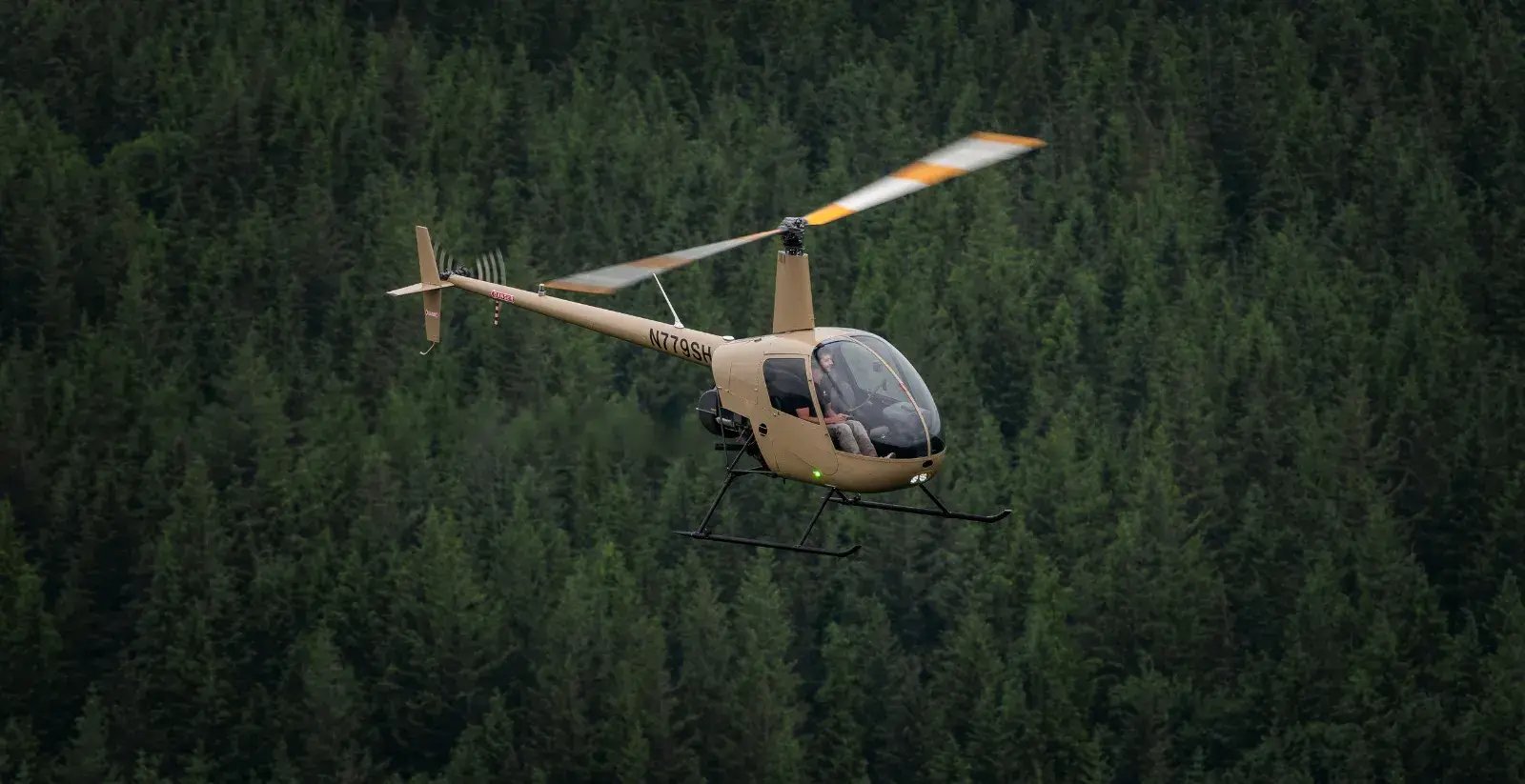
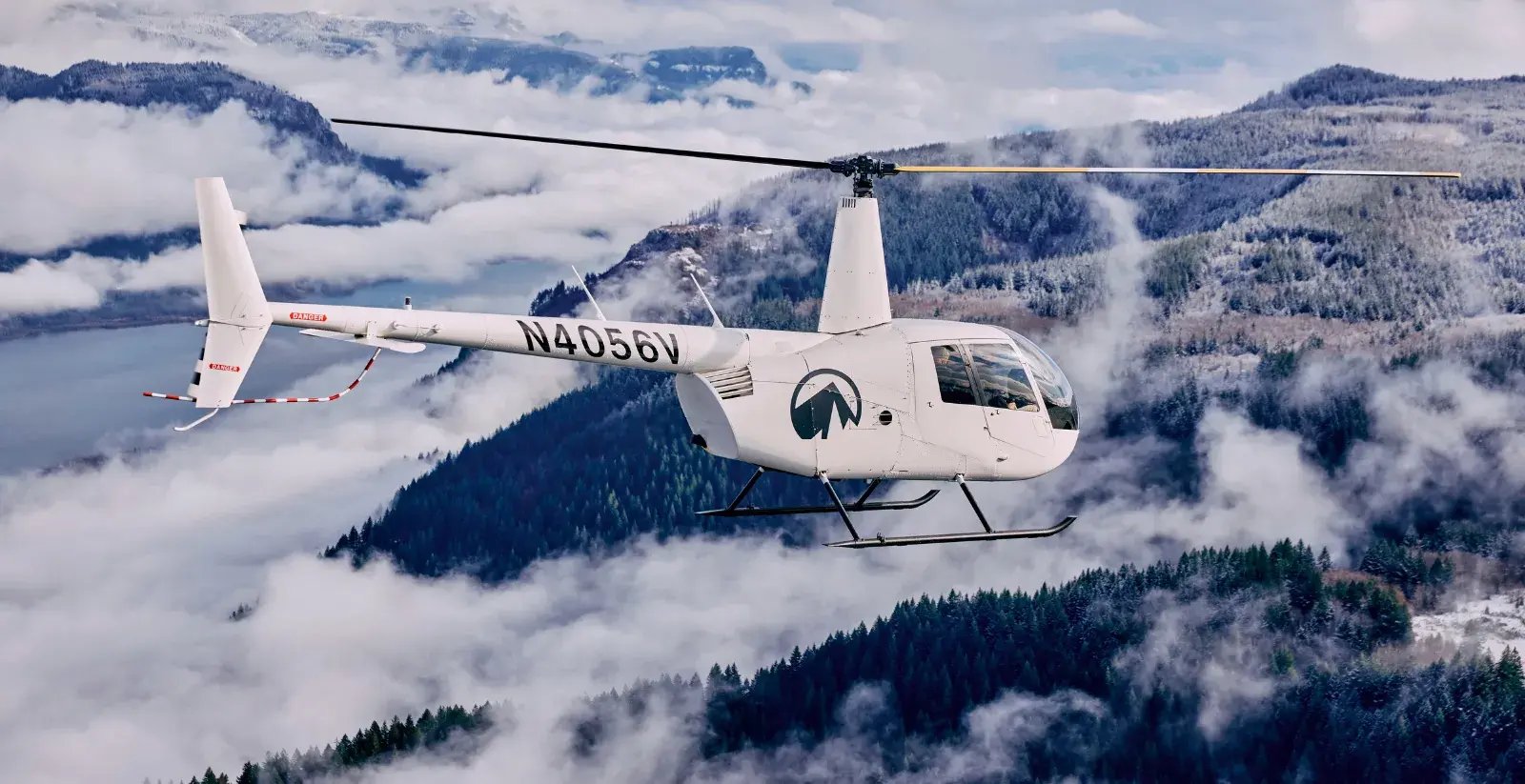
Students at Hillsboro Aero Academy's helicopter training program practice recognizing these cues across different helicopter types. The Robinson R22 and R44 exhibit particularly noticeable ETL characteristics, making them excellent training platforms for developing this essential skill.
Environmental Factors Affecting Translational Lift
Wind direction and speed significantly influence when and how translational lift develops. A headwind effectively lowers the groundspeed at which ETL occurs because the rotor system achieves the critical 16-24 knot airspeed threshold at a lower forward velocity relative to the ground. Conversely, tailwind operations require higher groundspeeds to reach ETL.
This has important implications for takeoff and landing operations. Pilots generally prefer to operate into the wind to maximize translational lift benefits at lower groundspeeds, improving safety margins during the critical acceleration and deceleration phases. When wind direction forces downwind operations, pilots must anticipate higher groundspeeds before achieving ETL and plan accordingly for available runway or clear area length.
Density altitude dramatically affects helicopter performance throughout the flight envelope, including translational lift operations. High density altitude reduces air density, decreasing both engine power output and rotor lift generation capability. The ETL threshold in terms of indicated airspeed remains similar, but the performance benefit may be less pronounced due to the overall reduction in aircraft capability.
Hot, high, and humid conditions create the most challenging environment for helicopter operations. Students learn to calculate density altitude before every flight and understand how it affects their aircraft's performance margins. The flight training tips we provide emphasize the importance of conservative planning when operating in elevated density altitude conditions.
Turbulence and gusty winds complicate translational lift management by creating rapid changes in relative wind across the rotor disc. A sudden gust can cause the aircraft to briefly gain or lose translational lift, requiring immediate control corrections to maintain the desired flight path. Pilots develop proficiency in these conditions through progressive training in increasingly challenging environments.
Training and Proficiency Development
Mastery of translational lift principles begins during initial flight training but continues throughout a pilot's career. Ground school instruction covers the aerodynamic theory, explaining how induced flow, vortex formation, and rotor efficiency interact during the transition from hover to forward flight. Students study performance charts and learn to calculate the effects of weight, altitude, and temperature on hover and transitional flight performance.
Flight instruction progresses systematically through the translational lift regime. Initial lessons focus on recognizing the onset of ETL during straight-ahead takeoffs, where students can concentrate on the aircraft's behavior without the added complexity of turning or maneuvering. Instructors point out the characteristic pitch change, pedal requirement shift, and power reduction as clear indicators of the ETL transition.
Advanced training introduces more complex scenarios. Confined area operations require precise management of translational lift during both entry and departure, often with limited space for acceleration or deceleration. Mountain flying operations demand careful attention to translational lift effects at high density altitudes where performance margins are minimal.
Recurrent training for experienced pilots often revisits translational lift principles in the context of new aircraft types or challenging environmental conditions. Each helicopter model has slightly different ETL characteristics based on rotor system design, and pilots must learn these nuances when transitioning to new equipment.
Frequently Asked Questions
What is the difference between translational lift and effective translational lift?
Translational lift refers to the gradual improvement in rotor efficiency that begins as soon as a helicopter starts moving horizontally, whether through forward flight or wind. Effective translational lift (ETL) is the specific airspeed range, typically 16-24 knots, where the rotor completely outruns its recirculating vortices and achieves maximum efficiency improvement. Think of translational lift as the continuous process and ETL as the critical threshold within that process.
Does translational lift occur during sideward or rearward flight?
Yes, translational lift occurs anytime the rotor system moves into undisturbed air, regardless of direction. Sideward flight, rearward flight, or hovering in a strong wind all produce translational lift effects. The key factor is relative wind across the rotor disc, not the specific direction of flight. However, most training focuses on forward flight because that's the primary operational flight mode.
How does weight affect the translational lift threshold?
Aircraft weight doesn't significantly change the airspeed at which ETL occurs, but it does affect how pronounced the benefits are. Heavier helicopters operate at higher power settings in hover, so the power reduction when reaching ETL is more noticeable. The pilot experiences a more dramatic improvement in aircraft performance when transitioning a heavily loaded helicopter through ETL compared to a lightly loaded one.
Can you hover a helicopter using only translational lift from wind?
A strong headwind can provide translational lift benefits even during a stationary hover relative to the ground. If wind speed reaches 16-24 knots, the rotor system operates in the clean air characteristic of ETL despite zero groundspeed. This is why helicopters can often hover at higher weights when strong winds are present. Pilots must remain aware that if wind decreases suddenly, the translational lift benefit disappears and the helicopter requires more power to maintain altitude.
Why do pilots need to apply forward cyclic when passing through ETL?
The increased lift on the front portion of the rotor disc as it enters clean air creates a nose-up pitching moment called blowback. Without forward cyclic input, the helicopter would pitch up excessively during acceleration through ETL, potentially compromising the desired flight path. This is a normal aerodynamic response that pilots anticipate and correct with smooth, coordinated control inputs.
What happens if you lose translational lift during a landing approach?
Losing translational lift during approach means the rotor returns to less efficient hover performance, requiring more power to maintain altitude. If pilots don't increase collective to compensate, the helicopter will settle below the intended glide path, potentially arriving short of the landing point. Proper approach planning includes anticipating the loss of translational lift and making smooth power adjustments to maintain a stabilized approach.
Disclaimer: This article presents a general overview of the field of aviation, including job opportunities within that field; it does not describe the educational objectives or expected employment outcomes of any particular program. Hillsboro Heli Academy, at Hillsboro Aero Academy, an Academic Unit of Northbridge University, does not guarantee that students will obtain employment or any particular job. Some positions may require licensure or other certifications. We encourage you to research the requirements for the particular career you desire.