
Retreating blade stall is a dangerous aerodynamic condition that occurs when the rotor blade moving away from a helicopter's direction of flight exceeds its critical angle of attack and loses lift. This happens during high-speed forward flight when the retreating blade experiences reduced relative airflow compared to the advancing blade, creating an asymmetric stall that can lead to violent pitch and roll motions. Understanding this phenomenon is essential for every helicopter pilot, as it represents one of the primary factors limiting maximum forward speed in rotary-wing aircraft.
Key Takeaways
- Retreating blade stall occurs at high forward speeds when the retreating rotor blade's angle of attack exceeds approximately 15 degrees, causing flow separation and sudden lift loss.
- Warning signs include distinctive low-frequency vibration, control stiffness, and uncommanded pitch-up with roll toward the retreating side.
- Correct recovery requires reducing collective pitch first, then gently applying aft cyclic to reduce airspeed (never apply forward cyclic, which worsens the stall).
- Prevention involves respecting VNE limits, especially when operating at high gross weight, high density altitude, or in turbulent air conditions.
Ready to start your helicopter pilot training? Get started with Hillsboro Aero Academy's training programs.
Start Your Helicopter Pilot Journey Today
Understanding aerodynamic phenomena like retreating blade stall is just one part of becoming a skilled, safe helicopter pilot. At Hillsboro Heli Academy, we've trained thousands of pilots from over 75 countries since 1980, allowing students to explore career options that can span airlines, emergency medical services, offshore operations, and more.
Our comprehensive training programs cover everything from basic private pilot certification through advanced commercial helicopter operations. We maintain a fleet of well-equipped training helicopters, employ experienced instructors, and operate from three Oregon campuses offering diverse flying conditions.
Whether you're just exploring the possibility of becoming a helicopter pilot or you're ready to begin training, we're here to answer your questions and help you chart your path. Contact us today to learn more about our helicopter training programs and take the first step toward your aviation career training.
Understanding the Aerodynamics Behind Retreating Blade Stall
The Problem of Dissymmetry of Lift
In a hover, all rotor blades experience uniform relative airflow regardless of their position in the rotor disk. Each blade generates equal lift as it rotates through 360 degrees. However, when a helicopter moves forward through the air, the aerodynamic environment changes dramatically due to the combination of rotational velocity and forward speed.
On the advancing blade side (the side moving in the same direction as the helicopter's flight path), the blade's rotational speed adds to the aircraft's forward speed. This creates high relative airflow velocity across the advancing blade. On the retreating blade side (moving opposite to the flight direction), the forward speed subtracts from the blade's rotational velocity, resulting in significantly lower relative blade speed.
Since lift is proportional to the square of airspeed, this velocity difference creates unequal lift across the rotor disc. The advancing side generates substantially more lift than the retreating side, which would create an uncontrollable rolling moment without compensation.
How Blade Flapping Compensates (Until It Can't)
Helicopter rotor systems use blade flapping to address this dissymmetry of lift problem. As the blade advances and experiences increased airflow, it naturally flaps upward. This upward motion reduces the blade's angle of attack, decreasing lift production on the advancing side.
Conversely, as the blade retreats and encounters reduced airflow, it flaps downward. This downward flapping increases the blade angle, which helps generate more lift to compensate for the lower airspeed. This elegant mechanical solution works well at moderate forward speeds.
|
Blade Position |
Relative Airspeed |
Blade Flapping |
Angle of Attack |
Lift Production |
|
Advancing Blade |
High (rotation + forward speed) |
Flaps upward |
Decreased |
Reduced to balance |
|
Retreating Blade |
Low (rotation - forward speed) |
Flaps downward |
Increased |
Increased to compensate |
The problem emerges at high forward speed when the retreating blade must flap so far downward to maintain lift that its angle of attack approaches or exceeds the critical angle (typically 12-20 degrees for helicopter airfoils). Once this critical angle of attack is exceeded, the smooth airflow over the blade's upper surface separates, and the blade enters a stall condition.
What Happens During Retreating Blade Stall
The Stall Progression
Unlike fixed-wing aircraft where the entire wing stalls symmetrically, retreating blade stall in helicopters occurs asymmetrically. Only the retreating rotor blade loses lift while the advancing blade continues generating substantial thrust. This creates an immediate and severe imbalance.
The stall typically begins at the blade tip on the retreating side where the lower forward airspeed is most pronounced. As conditions worsen or forward speed increases, the stall region expands inward along the blade span toward the rotor hub. This progression can happen rapidly, within seconds, if the pilot doesn't recognize early warning signs.
The asymmetric lift loss produces two dangerous motions:
- Nose pitch-up: The loss of lift on the retreating half of the rotor disk, combined with continued lift from the advancing side, creates a pitching moment that rotates the helicopter nose upward (sometimes exceeding 70 degrees of pitch).
- Roll toward the retreating side: The lift imbalance creates a rolling moment toward the side experiencing stall. Due to gyroscopic precession (a 90-degree phase lag in rotor response), the roll manifests strongly and can exceed 100 degrees of bank.
Warning Signs Every Pilot Must Recognize
Recognizing the early symptoms of retreating blade stall provides a critical window for corrective action before full loss of control develops. According to the FAA Helicopter Flying Handbook, pilots should watch for these indicators:
Vibration: A distinctive low-frequency vibration or "shudder" that differs from normal rotor vibrations. This one-per-revolution vibration occurs because stalled and unstalled blade sections alternate during rotation.
Control stiffness: The cyclic stick may feel stiff or unresponsive, and small pitch or roll oscillations become difficult to damp. Some pilots describe a "twitchy" quality to the controls.
Abnormal pitch behavior: The nose may begin rising without pilot input, and attempts to lower the nose through forward cyclic may prove ineffective or actually worsen the condition.
Pro Tip: If you feel unusual vibration combined with control stiffness at high airspeed, you're experiencing the onset of retreating blade stall. Reduce collective pitch immediately. Do not attempt to correct pitch attitude with cyclic alone, as this will worsen the stall and can lead to complete loss of control.
Contributing Factors That Increase Risk
High Forward Speed and VNE
The most obvious factor is excessive forward speed. Every helicopter has a published never-exceed speed (VNE) that represents the maximum safe airspeed under ideal conditions. This limit exists primarily to prevent retreating blade stall (and advancing blade compressibility effects on the opposite side of the rotor disk).
Operating near VNE leaves minimal margin for error. When forward speed increases beyond safe limits, the velocity differential between advancing and retreating blades becomes so extreme that even normal collective pitch settings can push the retreating blade angle beyond its stall angle.
Weight, Altitude, and Density Conditions
High gross weight directly increases susceptibility to blade stall because heavier aircraft require higher collective pitch to maintain flight. This elevated pitch setting increases the angle of attack across all blade positions, consuming part of the available angle-of-attack margin before reaching the critical stall angle.
High density altitude (caused by high elevation, high temperature, or both) produces similar effects. In thin air, rotor blades must operate at higher angles of attack to generate sufficient lift. A helicopter that safely cruises at 120 knots at sea level might experience retreating blade stall at only 90 knots when operating at 10,000 feet density altitude, as documented by SKYbrary's aviation safety database.
The combination of high gross weight and high density altitude creates particularly dangerous conditions. The 2013 BK117 medical helicopter incident analyzed by Aerossurance occurred at near-maximum takeoff weight at 5,000 feet altitude, conditions that dramatically reduced the stall margin.
Low Rotor RPM
Low rotor rpm represents an often-overlooked contributing factor. When rotor speed decreases below normal operating range, blade velocities decrease proportionally. Since lift depends on airspeed squared, this velocity reduction requires substantially higher blade pitch angles to maintain the same lift at a given forward speed.
These increased pitch angles directly elevate the retreating blade angle of attack, potentially triggering stall at airspeeds well below the published VNE. Many helicopter accidents involving retreating blade stall show that pilots allowed rotor RPM to decay during high-speed flight, unknowingly creating the perfect conditions for catastrophic stall onset.
Turbulence and Maneuvering
Turbulent air introduces dynamic changes in effective wind speed across the rotor disk. A tailwind gust effectively increases the helicopter's forward speed relative to the airmass, potentially triggering stall even when indicated airspeed remains within limits. The BK117 incident occurred in light to moderate turbulence with a 15-knot tailwind, environmental factors that contributed to the stall.
Abrupt turns or aggressive maneuvers increase the effective load on the rotor system. During a steep turn, the helicopter must generate additional lift to support the increased g-loading, requiring higher collective pitch. This combination of forward speed, increased pitch, and maneuvering can precipitate stall at airspeeds substantially below straight-and-level VNE.
The Correct Recovery Procedure
Why Instinctive Responses Fail
When a helicopter suddenly pitches nose-up and rolls, a pilot's natural instinct screams to push forward on the cyclic stick to lower the nose. This instinctive response is precisely wrong and will worsen the stall. Forward cyclic input increases the blade pitch on the retreating side of the rotor disc, driving the already-stalled blade deeper into stall and accelerating the loss of control.
The BK117 incident investigation revealed that the pilot initially applied full forward cyclic with both hands in an attempt to arrest the nose-up pitch. This incorrect recovery action exacerbated the stall condition and delayed recovery, consuming precious altitude. The helicopter descended from 5,000 feet to approximately 1,000 feet (only 800 feet above terrain) before successful recovery.
The Three-Step Recovery
The correct recovery procedure, as outlined in the FAA Helicopter Flying Handbook, involves three sequential actions:
1. Reduce collective pitch immediately
Lower the collective to decrease the angle of attack on all blade positions, particularly the stalled retreating blade. This action simultaneously reduces airspeed through increased drag, increases rotor RPM through reduced blade loading, and directly addresses the root cause by reducing blade angle.
2. Increase rotor RPM if necessary
If rotor RPM has decayed below the normal operating range, increase throttle (on helicopters without governors) to restore proper rotor speed. Higher RPM increases blade velocity, which reduces the angle of attack required for a given amount of lift.
3. Gently apply aft cyclic to reduce airspeed
Only after lowering collective should you carefully apply aft cyclic pressure to establish a climb attitude and further reduce airspeed. Use smooth, measured inputs rather than abrupt control movements that might re-excite stall conditions.
The recovery must be performed in this exact sequence. Attempting cyclic correction before reducing collective will worsen the stall and potentially exceed the helicopter's structural limits or available altitude for recovery.
Prevention Strategies and Best Practices
Respecting VNE and Understanding Its Variables
The published VNE represents the maximum safe airspeed under specific conditions (typically sea level, standard temperature, light weight). This limit decreases with altitude, as shown in the helicopter's flight manual or placard. Pilots must reference these charts and adjust their maximum operating speed accordingly.
Beyond simple chart-reading, defensive flying involves maintaining a buffer below VNE. Operating 10-15 knots below the published limit provides margin for gusts, turbulence, and the inevitable small variations in airspeed that occur during normal flight. This buffer becomes even more critical when operating in flight conditions involving turbulence, high gross weight, or elevated density altitude.
Weight and Performance Planning
Before flight, carefully calculate your helicopter's current gross weight and compare it against performance charts. Understand that maximum cruise speeds published in the aircraft manual typically assume light or moderate weights. A heavily loaded helicopter approaching maximum gross weight will experience retreating blade stall at lower airspeeds than a lightly loaded aircraft.
Center of gravity position also matters. An aft CG position (near the rearward limit) typically requires higher forward cyclic inputs during cruise, which increases blade pitch on the retreating side and reduces stall margin. The BK117 incident involved near-maximum weight with an aft CG position, a combination that consumed much of the available safety margin.
Environmental Awareness
Monitor density altitude carefully when operating in mountainous terrain or on hot days. Use your helicopter's performance charts to determine the reduced VNE for current density altitude conditions. A helicopter certified for 130 knots VNE at sea level might have an effective VNE of only 100 knots at 8,000 feet on a hot day.
Pay attention to wind conditions, particularly tailwinds during cruise flight. A 20-knot tailwind effectively increases your groundspeed without changing indicated airspeed, but gusts or shifts in that tailwind can momentarily increase your actual airspeed relative to the airmass, potentially triggering stall.
Training and Skill Maintenance
While flight schools cannot safely demonstrate actual retreating blade stall due to its dangerous nature, quality helicopter pilot training programs emphasize recognition and prevention. Simulator training can provide exposure to the warning signs without actual risk.
Understanding the aerodynamic principles allows pilots to recognize the combination of conditions that create risk. If you're flying at high gross weight, at moderate altitude, in turbulent conditions, with rotor RPM on the low side of the green arc, you should be operating well below VNE with heightened vigilance for any unusual vibration or control characteristics.
Advanced Considerations: Dynamic Stall and Reverse Flow
The Complexity of Dynamic Stall
The retreating blade doesn't simply enter a static stall condition as a fixed-wing airfoil might. Instead, it experiences dynamic stall, a complex phenomenon involving time-dependent flow separation and reattachment. As the blade rotates through the rotor disk, the angle of attack continuously changes, causing the blade to dynamically pitch up and down.
During dynamic stall, a leading-edge vortex forms and travels across the blade's upper surface, temporarily producing lift coefficients that exceed the static maximum. This vortex eventually sheds into the wake, causing a sudden lift loss and strong nose-down pitching moment. The hysteresis (lag) between the increasing and decreasing angle of attack portions of the cycle creates additional loading challenges.
This dynamic behavior means that the retreating blade might briefly tolerate angles of attack above the static stall angle (around 15 degrees for most helicopter airfoils) without immediately losing all lift. However, this temporary tolerance is unreliable and varies with blade section, radial position, and flight conditions.
Reverse Flow Region
At high forward speeds, an additional complication arises near the rotor hub on the retreating side. In this reverse flow region, the helicopter's forward velocity exceeds the blade's rotational velocity (moving in the opposite direction). The relative airflow actually strikes the blade from behind rather than from ahead.
This reverse flow region expands outward from the hub as forward speed increases. While these inner blade sections contribute relatively little to total rotor thrust, the disturbed and reversed flow in this region adds complexity to the overall aerodynamic environment and can contribute to vibration and control difficulties during high-speed flight.
Modern Solutions and Technology
Morphing Blade Technology
Recent research, including the European Union-funded SABRE (Shape Adaptive Blades for Rotorcraft Efficiency) project, has explored morphing rotor blade technology that adapts blade geometry in real-time to changing flight conditions. According to Bristol University's engineering research, these adaptive blades can modify camber, twist, and chord length to optimize performance across the flight envelope.
The SABRE project demonstrated fuel burn reductions of 5-11 percent through morphing technologies, with potential for up to 20 percent improvements through further optimization. More importantly for retreating blade stall mitigation, morphing blades can increase their angle before stalling by adjusting their camber and twist distribution in real-time, potentially extending safe forward speed limits.
Advanced Blade Designs
The British Experimental Rotor Programme (BERP) blade, with its distinctive swept tip and notched leading edge, represents another approach to managing both retreating blade stall and advancing blade compressibility. The BERP design delays stall onset on the retreating blade through sophisticated leading-edge vortex control while simultaneously reducing shock formation on the advancing side.
These advanced blade designs have enabled helicopters like the Westland Lynx to achieve speeds exceeding 200 knots, pushing beyond the traditional limits imposed by retreating blade stall. However, these specialized rotor systems add complexity and cost, limiting their adoption primarily to high-performance military and specialized civilian applications.
Compound Helicopter Configurations
An alternative approach involves compound helicopter designs that add wings and auxiliary propulsion. By offloading the main rotor during high-speed cruise, these designs reduce the collective pitch required, which lowers blade angles of attack and delays stall onset. The wings provide supplementary lift while pusher propellers provide forward thrust, allowing the helicopter to exceed speeds limited by conventional rotor systems.
Programs like the U.S. Army's Future Vertical Lift initiative explore these compound architectures as pathways to achieving 200+ knot speeds while retaining helicopter-like hover capabilities. These designs represent fundamental architectural changes rather than simple rotor improvements.
Real-World Incident: Lessons from the BK117 Case
The 2013 Airbus BK117B2 medical helicopter incident documented by Aerossurance provides critical lessons about how multiple factors combine to create retreating blade stall conditions:
The Setup: The helicopter was conducting a medical evacuation flight from Port Pirie to Adelaide, Australia, carrying a pilot, crewman, two medical personnel, and one patient. The aircraft operated at near-maximum takeoff weight with an aft center of gravity position. Cruise altitude was 5,000 feet in light to moderate turbulence with a 15-knot tailwind. The pilot selected 115 knots, just 5 knots below the calculated VNE for those conditions.
The Event: Without warning, the helicopter experienced violent nose-up pitch (approximately 70 degrees) combined with pronounced roll toward the left side (the retreating blade side for counterclockwise rotor systems). The pilot instinctively applied full forward cyclic, which worsened the stall by further increasing blade pitch angles on the retreating side. The aircraft continued its divergent pitch and roll, descending rapidly through 4,000 feet of altitude.
The Recovery: Only when the pilot could see the ground through the windscreen during the descent did he reverse his control inputs, applying full rearward cyclic. This action, combined with the reduced airspeed from the descent, finally allowed recovery at approximately 1,000 feet altitude, leaving minimal margin above the terrain.
The Lessons: This incident demonstrates several critical principles. First, operating close to VNE with multiple risk factors present (high weight, aft CG, altitude, turbulence, tailwind) left no safety margin. Second, the pilot's instinctive control response worsened the emergency and delayed recovery. Third, even experienced pilots can fall victim to retreating blade stall when they don't maintain awareness of the cumulative risk factors.
Operational Considerations for Different Helicopter Types
Light Piston Helicopters
Training helicopters like the Robinson R22 and R44 have relatively low VNE values (approximately 100-130 knots depending on weight and altitude) specifically to provide protection against retreating blade stall. These aircraft use two-bladed, teetering rotor systems that are particularly sensitive to asymmetric loading.
Pilots transitioning to these aircraft from other helicopters must carefully study the VNE charts and understand how quickly the speed limit decreases with altitude. The combination of lighter rotor inertia (low rotor disk area) and teetering rotor dynamics makes these aircraft less forgiving of VNE exceedances than larger helicopters with more rotor inertia.
Turbine Helicopters and Larger Aircraft
Medium and heavy turbine helicopters typically have higher VNE values and more sophisticated rotor systems with three or more blades. The greater rotor inertia provides more damping of asymmetric loads, and the articulated or hingeless rotor designs offer different dynamic characteristics.
However, these aircraft can achieve higher forward speeds, which means the absolute magnitude of the dissymmetry problem becomes more severe. A Bell 407 cruising at 140 knots experiences greater velocity differences between advancing and retreating blades than an R44 at its 100-knot VNE. The more sophisticated rotor systems manage these differences better, but the pilot must still respect the published limits.
The Relationship Between Retreating Blade Stall and Other Limiting Factors
Advancing Blade Compressibility
While the retreating blade faces stall limits at high forward speed, the advancing blade simultaneously approaches another aerodynamic limit. As forward speed increases, the advancing blade tip can approach transonic speeds (near Mach 1.0), where compressibility effects create shock waves and flow separation.
This advancing blade compressibility creates its own set of problems including increased drag, vibration, and control difficulties. In most helicopters, VNE is set to avoid whichever limit is reached first - retreating blade stall or advancing blade compressibility. This is why VNE represents a true "never exceed" limit rather than a conservative suggestion.
Mast Bumping and Control Authority
At high forward speeds with aggressive maneuvering, some helicopters (particularly those with teetering rotors like Robinson helicopters) face additional risks including mast bumping. This catastrophic failure occurs when excessive rotor disk tilting allows the rotor hub to contact the mast, potentially causing immediate structural failure.
While distinct from retreating blade stall, mast bumping shares some risk factors including high-speed flight, turbulence, and abrupt control inputs. Pilots must recognize that VNE and maneuvering limits exist to prevent multiple failure modes, not just blade stall.
Training Programs at Hillsboro Aero Academy
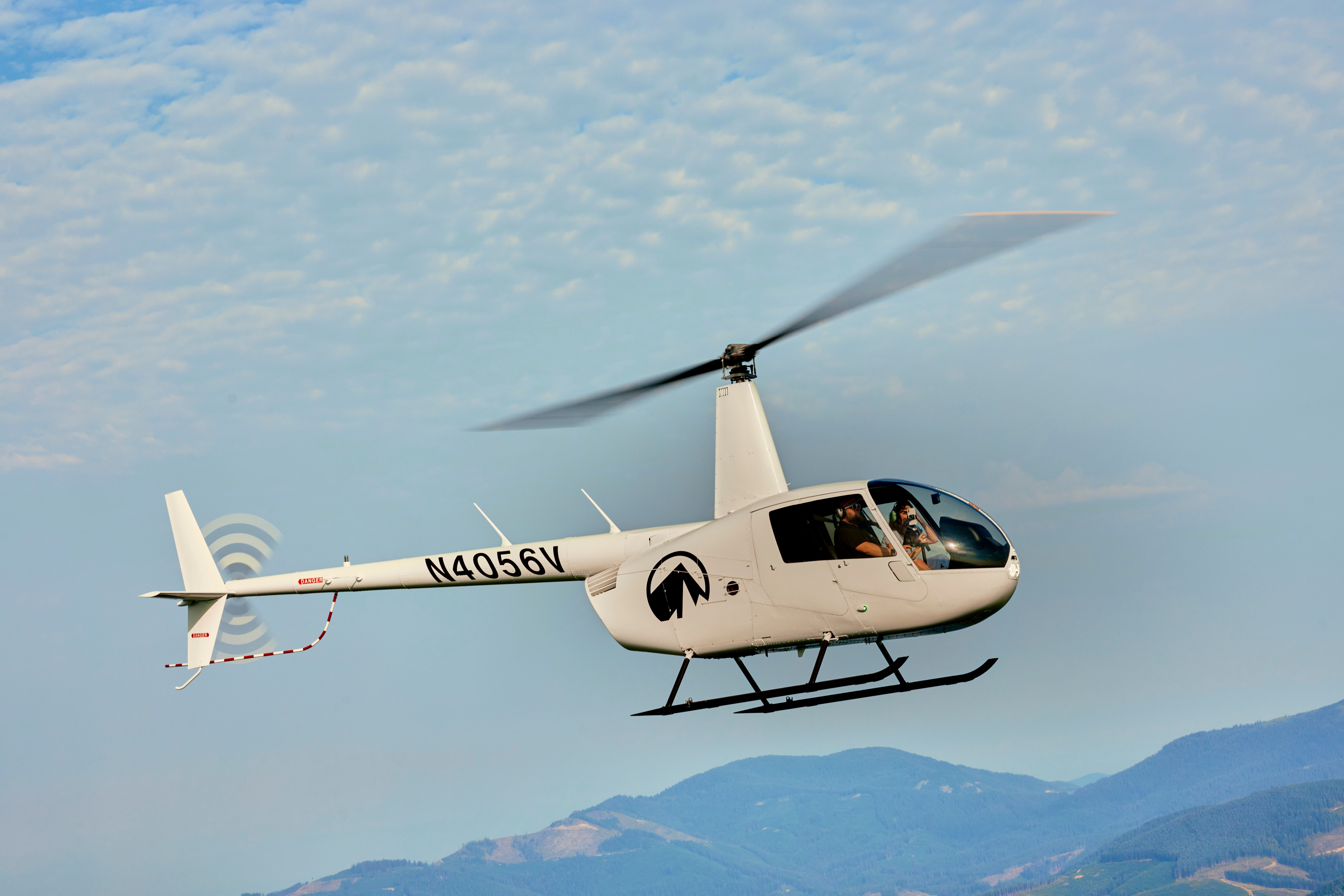
At Hillsboro Aero Academy, we emphasize comprehensive aerodynamic education as part of our helicopter flight training programs. Understanding phenomena like retreating blade stall isn't just academic knowledge. It's essential survival information that every helicopter pilot must internalize.
Our flight training curriculum covers the physics of rotor systems, the limitations they impose, and the operational techniques to remain safely within the flight envelope. Through ground school and practical flight instruction in our Robinson R22 and R44 helicopters, students learn to recognize the warning signs and practice proper recovery procedures.
We teach students to think critically about the combination of factors that create risk. Rather than simply memorizing that "VNE is 100 knots," we want pilots to understand why that limit exists, how it changes with conditions, and what margin they should maintain based on current weight, altitude, and environmental factors. For those interested in starting this journey, our guide on how to become a helicopter pilot provides a comprehensive overview of the training process.
Our instructors provide real-world perspective on managing these aerodynamic challenges during actual operations. Learning proper hovering techniques and understanding helicopter control responses builds the foundation for advanced understanding of phenomena like blade stall.
Frequently Asked Questions
What causes the lower relative blade speed on the retreating blade?
The retreating blade moves in the opposite direction to the helicopter's forward flight, so the aircraft's forward speed subtracts from the blade's rotational velocity. This creates significantly lower relative airspeed compared to the advancing blade where speeds add together.
At what critical angle of attack does retreating blade stall occur?
Most helicopter rotor airfoils experience stall onset at angles of attack between 12 and 20 degrees, depending on the specific airfoil design and operating Reynolds number. The exact critical angle of attack varies with blade section and flight conditions.
How does high gross weight affect retreating blade stall?
High gross weight requires higher collective pitch to generate sufficient lift, which increases the angle of attack across all blade positions. This elevated baseline angle consumes part of the available margin before reaching the stall angle, making the helicopter more susceptible to blade stall at lower airspeeds.
What is the stall region on a helicopter rotor blade?
The stall region begins at the blade tip on the retreating side where relative airspeed is lowest, then expands inward toward the hub as conditions worsen. At high forward speeds, this stalled region can encompass a significant portion of the retreating blade's outer span.
Does density altitude affect retreating blade stall?
Yes, high density altitude (caused by high elevation, high temperature, or both) reduces air density and requires higher blade angles of attack to generate the same lift. This reduces the margin before stall and causes retreating blade stall to occur at lower forward airspeeds compared to sea-level operations.
What is the reverse flow region and how does it relate to blade stall?
The reverse flow region exists near the rotor hub on the retreating side where the helicopter's forward velocity exceeds the blade's rotational velocity. In this zone, airflow strikes the blade from behind rather than from ahead. While this region contributes little to total lift, it adds complexity to the aerodynamic environment during high-speed flight.
Can turbulent air precipitate retreating blade stall below VNE?
Yes, turbulent air introduces dynamic airspeed variations that can temporarily push the aircraft beyond safe limits even when indicated airspeed remains constant. Tailwind gusts are particularly dangerous as they effectively increase forward speed relative to the airmass without changing cockpit indications.
How do you equalize lift between advancing and retreating blades?
Rotor systems use blade flapping to partially equalize lift. The advancing blade flaps upward (reducing its angle of attack), while the retreating blade flaps downward (increasing its angle). This mechanical compensation works at moderate speeds but becomes insufficient at high forward speeds where the velocity asymmetry becomes too extreme.
What role does the cyclic stick play in retreating blade stall?
The cyclic stick controls the rotor disk tilt by changing blade pitch angles as blades rotate through different positions. Excessive forward cyclic inputs increase blade pitch on the retreating side, which can precipitate or worsen blade stall. During recovery, forward cyclic is contraindicated as it exacerbates the stall condition.
Does collective pitch affect the hazardous flight condition?
Yes, collective pitch directly controls the baseline angle of attack for all blade positions. High collective pitch settings (required for heavy weights or climbs) increase the angle of attack across the entire rotor disk, reducing the margin before the retreating blade reaches its critical angle at any given forward speed.
How does forward speed increase the risk of blade stall?
As forward speed increases, the velocity difference between advancing and retreating blades grows larger. The retreating blade must operate at progressively higher angles of attack to compensate for its lower relative airspeed, eventually reaching the critical stall angle if speed becomes too high.
What happens on the advancing side during retreating blade stall?
The advancing side continues generating substantial lift while the retreating side loses lift. This asymmetric loading creates the rolling moment toward the retreating side and the nose-up pitching moment that characterize blade stall onset.
Are abrupt turns more likely to cause blade stall?
Yes, abrupt turns increase the load factor on the rotor system, requiring higher collective pitch to maintain altitude during the maneuver. This elevated pitch angle, combined with forward speed, can trigger blade stall at airspeeds that would be safe during straight-and-level flight.
How do you reduce airspeed safely during retreating blade stall recovery?
After first lowering collective pitch, gently apply aft cyclic to establish a climb attitude and allow airspeed to decrease naturally. Avoid abrupt control inputs that might re-excite stall conditions or exceed structural limits during the recovery.
What does the flight manual say about VNE and blade stall?
The flight manual (or placard) provides VNE charts showing how maximum safe airspeed decreases with altitude and sometimes with weight. These limits exist specifically to prevent retreating blade stall and advancing blade compressibility, and pilots must strictly adhere to them.
Can low rotor RPM contribute to blade stall?
Yes, low rotor rpm reduces blade velocities, requiring higher blade pitch angles to maintain lift at a given airspeed. These increased pitch angles raise the angle of attack on the retreating blade, making stall onset possible at airspeeds well below normal VNE.
What is the relationship between blade angle and stall angle?
Blade angle (collective and cyclic pitch input) directly controls the angle of attack the blade experiences. When blade angle is set too high for the current relative airspeed, the angle of attack can exceed the stall angle (approximately 12-20 degrees), causing flow separation and lift loss.
How does gyroscopic precession affect the helicopter during blade stall?
Gyroscopic precession causes the rotor system to respond to control inputs 90 degrees later in the plane of rotation. During retreating blade stall, this precession contributes to the complex coupling between pitching and rolling motions that make the condition so difficult to control.
What physical sensation indicates loss of lift during blade stall?
Pilots typically feel distinctive low-frequency vibration or shuddering, control stiffness, and uncommanded pitch-up with roll toward the retreating side. Some describe a "twitchy" quality to the controls as the helicopter oscillates in pitch and roll.
Does blade tip speed affect retreating blade stall susceptibility?
Yes, higher rotor RPM increases blade tip speed, which improves the velocity on the retreating side and reduces the angle of attack required for a given amount of lift. Conversely, allowing rotor RPM to decay increases blade stall susceptibility.
How do flight conditions like weight and altitude combine to affect stall onset?
Multiple risk factors combine multiplicatively rather than additively. Operating at high gross weight reduces margin, high altitude reduces it further, and adding turbulence or maneuvering can trigger stall at speeds well below the sea-level, light-weight VNE. Pilots must account for all factors simultaneously.
__
This article presents a general overview of the field of aviation, including job opportunities within that field; it does not describe the educational objectives or expected employment outcomes of a particular Hillsboro Aero Academy program. Hillsboro Aero Academy does not guarantee that students will obtain employment or any particular job. Some positions may require licensure or other certifications. We encourage you to research the requirements for the particular career you desire.