
You've just walked across the stage, diploma in hand, and you're ready to chase your dream of becoming a commercial pilot. The good news? You can start flight training immediately after high school, and the path to the cockpit is more accessible than ever.
Starting your pilot career right after high school gives you a significant advantage. You can begin flight training as early as 16 by obtaining your student pilot certificate and earn your private pilot license at 17m then continue working toward your commercial pilot certificate while your peers are still deciding on a major. The aviation industry needs approximately 660,000 new pilots globally over the next 20 years, creating exceptional career opportunities for those who start early.
Key Takeaways
- Although the FAA allows beginning flight training at 16 and earning a private pilot license at 17, Hillsboro Aero Academy requires students to be at least 18 to begin flight training.
- The complete pathway from zero experience to commercial pilot takes 18-24 months with dedicated training
- You'll need a minimum of 250 flight hours under Part 61 (or 190 hours under Part 141) to qualify for your commercial pilot certificate
- Building hours as a certified flight instructor is the most common path to reaching the 1,500 hour minimum required for airline eligibility
- Also, after earning your commercial pilot license, you can start working in a variety of roles across the aviation industry, such as banner towing, flying for charter companies, conducting tour flights, aerial photography, pipeline patrol, and more.
Ready to start your aviation career? Contact Hillsboro Aero Academy today to learn about our professional pilot training programs.
No College Required to Be a Pilot, But Here’s Why It Still Matters
High school graduates bring fresh energy, adaptability, and tech-savvy skills that translate perfectly to modern aviation. Unlike career changers who must balance family obligations and financial commitments, recent graduates can dedicate themselves fully to flight training.
The Federal Aviation Administration allows student pilots to begin training at 16 years old for student pilot certifications. By starting right after high school, you can complete your private pilot training, build flight experience, and potentially reach the airlines by your early 20s. That's years ahead of pilots who wait until after college to begin their aviation career.
Many aspiring pilots wonder if they need a college degree to become a commercial pilot. The short answer: no, a college degree is not required for commercial pilot certification. However, major airlines often prefer candidates with degrees, and having one can give you a competitive edge when applying to regional airlines and major carriers like United Airlines.
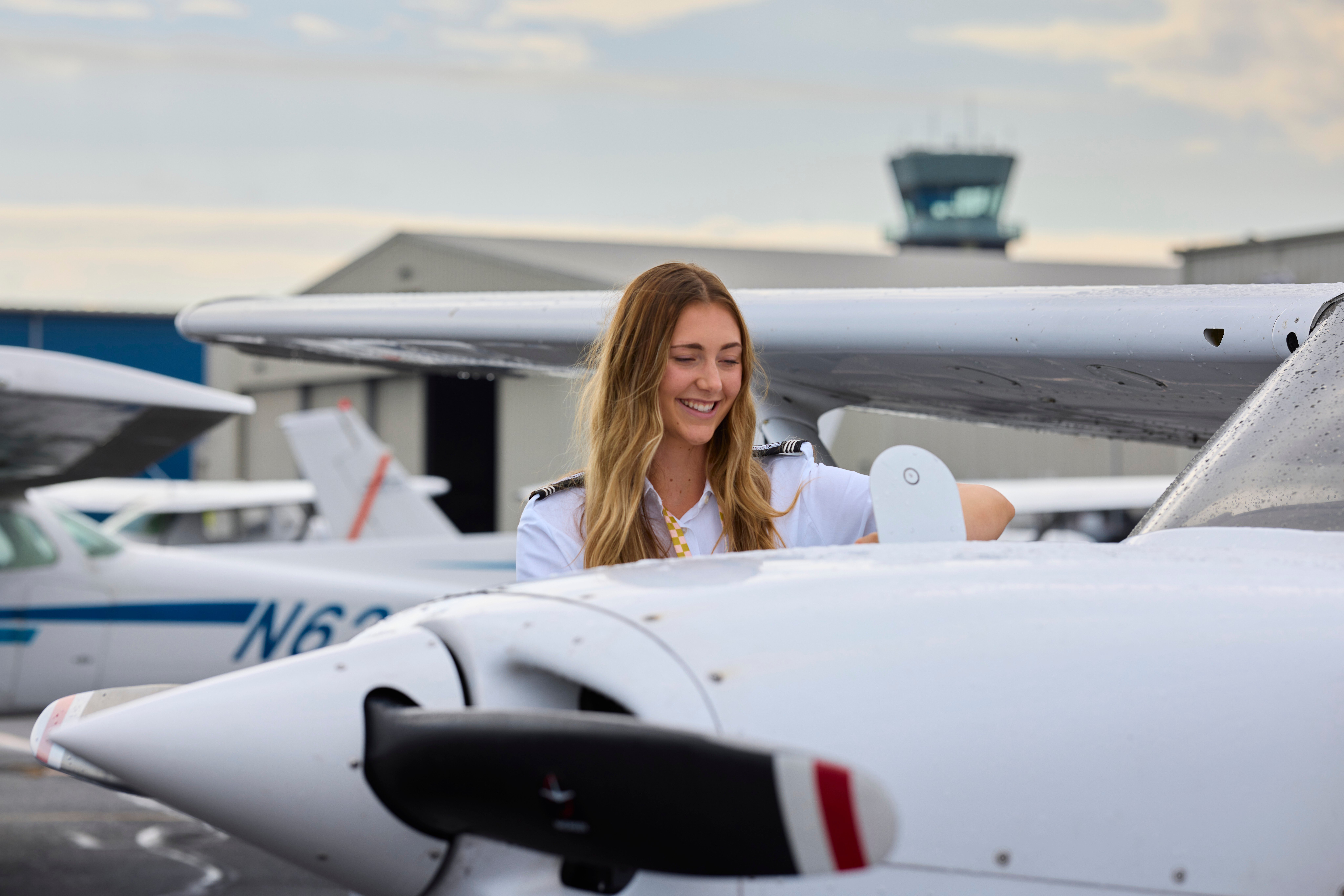
The Step-by-Step Path to Becoming a Commercial Pilot
Step 1: Obtain Your Private Pilot License (PPL)
Your journey to becoming a commercial pilot starts with earning your private pilot license. This is your foundation, where you'll learn aircraft control, navigation, weather interpretation, and basic aeronautical decision-making.
Requirements for private pilot certification:
- Minimum age of 17 years old (you can start training at 18 in Hillsboro Aero Academy)
- At least 40 hours of flight time (Part 61) or 35 hours (Part 141)
- Pass the FAA written knowledge test with a score of 70% or higher
- Hold at least a third-class FAA medical certificate
- Pass a practical test (checkride) with a designated pilot examiner
The private pilot license takes most students 3-6 months to complete when training consistently. You'll spend this time mastering takeoffs and landings, cross-country navigation, emergency procedures, and night flying. Once you've earned your private pilot certificate, you can legally fly single-engine aircraft and carry passengers (though you cannot fly for compensation).
Learn more about how flight school works and what to expect during your private pilot training.
Step 2: Earn Your Instrument Rating
After obtaining your private pilot license, the next critical step is earning your instrument rating. This certification allows you to fly in instrument meteorological conditions (IMC) and navigate using instrument flight rules, which is essential for commercial operations.
Instrument rating requirements:
- Hold a valid private pilot certificate
- Complete 40-50 hours of instrument flight time (actual or simulated)
- Log 50 hours of cross-country flight time as pilot-in-command
- Pass the instrument knowledge test and practical exam
The instrument rating typically takes 2-4 months to complete. During this training, you'll learn to trust your instruments over your senses, master instrument approaches and departures, and develop the skills to safely navigate through clouds and low-visibility conditions. This rating is technically optional for commercial certification, but virtually all professional pilots hold it, and many flight schools integrate it into their commercial pilot training programs.
Step 3: Obtain Your Commercial Pilot License
Here’s where many student pilots hit a reality check. To earn your commercial pilot license, you need a minimum of 250 total flight hours under Part 61 regulations (or 190 hours under Part 141). After completing your private pilot license and instrument rating, you'll typically have 80–120 hours. So how do you build the remaining flight time?
- Time Building Flights: Cross-country trips, solo practice, and safety pilot flying to accumulate hours efficiently
- Multi-Engine Training: Add a multi-engine rating to expand your qualifications and increase career competitiveness
Once you've accumulated the necessary flight hours, you're ready to pursue your commercial pilot certificate. This is the certification that allows you to fly aircraft for compensation, opening the door to professional flying jobs.
Commercial pilot certificate requirements:
- Minimum age of 18 years old
- Hold a private pilot certificate
- At least 250 hours total flight time (Part 61) or 190 hours (Part 141)
- 100 hours of pilot-in-command time, with 50 hours in airplanes
- 50 hours of cross-country flight time as pilot-in-command
- 10 hours in a complex, turbine-powered, or technically advanced airplane
- 10 hours of instrument training
- Pass the commercial pilot knowledge test and practical exam
- Hold at least a second-class medical certificate
The commercial pilot practical test evaluates your ability to perform advanced maneuvers like steep turns, chandelles, lazy eights, and precision landings. You'll also demonstrate commercial-level aeronautical decision-making and risk management. The checkride typically lasts 3-4 hours, including both an oral examination and flight test.
For a complete breakdown of the different certifications, check out our guide on types of pilot licenses.
Step 4: Build Hours Toward Your Airline Transport Pilot Certificate
After earning your commercial pilot license, your next major milestone is reaching 1,500 flight hours to qualify for your airline transport pilot (ATP) certificate. The ATP is required to serve as a captain for an airline and is often required (or strongly preferred) even for first officer positions at regional airlines.
Airline Transport Pilot (ATP) Certificate Requirements
- Be at least 23 years old (or 21 for a Restricted ATP)
- Hold at least a commercial pilot certificate with an instrument rating
- Meet aeronautical experience requirements:
- 1,500 total flight hours (may be reduced for Restricted ATP eligibility)
- 500 hours of cross-country flight time
- 100 hours of night flight time
- 75 hours of instrument flight time
- 250 hours of pilot-in-command (PIC) time (or as required under specific ATP provisions)
- Complete the Airline Transport Pilot Certification Training Program (ATP-CTP)
- Pass the FAA ATP Knowledge Test
- Pass the FAA ATP Practical Test (Checkride)
- Hold at least a valid first-class medical certificate
Building hours to ATP minimums:
- Flight Instructor (CFI): The most common and reliable path. By teaching students and flying daily, most pilots reach 1,500 hours within 1–2 years while developing strong stick-and-rudder skills and aeronautical decision-making.
- Pipeline / Powerline Patrol: Low-altitude flying along pipelines or powerlines provides consistent flight hours and sharpens precision flying skills in real-world conditions.
- Aerial Survey / Photogrammetry: Flying long cross-country routes for mapping, imaging, or data collection. This is an efficient way to log large amounts of flight time while gaining operational experience.
- Corporate or Charter Flying (Part 135): Commercial pilot roles that provide exposure to turbine aircraft, real-world IFR operations, and professional crew environments.
- Cargo Operations: Entry-level first officer positions with freight carriers allow pilots to build multi-engine and turbine time, often in structured, high-frequency operations.
Many pilots spend 12-24 months as certified flight instructors before transitioning to regional airlines. This pathway not only builds flight hours but also strengthens your aeronautical knowledge, communication skills, and decision-making abilities. The experience of teaching others to fly makes you a better pilot and a more competitive airline candidate.
Explore the full pilot career path to understand how your career can progress from flight instructor to regional airline to major airlines.

Understanding Flight Training Options: Part 61 vs Part 141
When you begin your pilot training, you'll need to choose between two training pathways: Part 61 and Part 141. Both lead to the same FAA certificates, but they differ in structure, flexibility, and minimum hour requirements.
|
Factor |
Part 61 |
Part 141 |
|
Minimum Commercial Hours |
250 hours |
190 hours |
|
Training Structure |
Flexible, self-paced |
Structured curriculum with stage checks |
|
Training Timeline |
12-18 months typical |
9-14 months typical |
|
Cost |
Variable, often lower hourly rates |
Higher upfront costs, potential savings from fewer hours |
|
Best For |
Students wanting flexibility or training part-time |
Students committed to full-time, accelerated training |
Part 61 flight schools offer maximum flexibility. You can train at your own pace, choose your schedule, and customize your training to your goals. This pathway works well for high school graduates who might work part-time while training or who want to spread out costs. The downside? You'll need the full 250 hours for your commercial certificate.
Part 141 flight schools operate under FAA-approved curricula with standardized training stages and regular progress checks. These programs can reduce your minimum hour requirements to 190 hours for commercial certification, potentially saving you time and money. Part 141 schools typically offer more structured scheduling and resources, making them ideal for students committed to full-time training.
Hillsboro Aero Academy operates as a Part 141 school, offering both FAA and EASA certifications under approved training programs. Our structured approach ensures consistent progress while our experienced instructors provide personalized attention throughout your training.
Medical Requirements: What You Need to Know
Before investing in flight training, you should understand the medical requirements for commercial pilots. The Federal Aviation Administration requires all pilots to hold a valid medical certificate appropriate to the privileges they're exercising.
Medical certificate classes for pilots:
- Third-class medical: Required for private pilot operations (valid 60 months if under 40, 24 months if over 40)
- Second-class medical: Required for commercial pilot operations (valid 12 months)
- First-class medical: Required for airline transport pilot operations (valid 12 months if under 40, 6 months if over 40)
For commercial pilot certification, you must hold at least a second-class FAA medical certificate. This involves a physical examination by an FAA-authorized Aviation Medical Examiner (AME) who will evaluate your vision, hearing, cardiovascular health, mental health, and overall physical fitness.
Common medical standards for commercial pilots:
- Vision: 20/40 or better in each eye (with or without correction)
- Hearing: Ability to hear conversational voice at 6 feet
- Blood pressure: Generally 155/95 or below
- No disqualifying conditions like epilepsy, certain cardiac conditions, or substance dependence
Most healthy high school graduates easily meet these standards. If you have concerns about a specific medical condition, consider scheduling a consultation with an Aviation Medical Examiner before beginning expensive flight training. Learn more about navigating FAA medicals as you pursue your professional pilot career.
Pro Tip: Get your medical certificate early in the process. There's no point spending thousands on flight training if you discover a disqualifying medical condition later. Schedule your medical exam before or shortly after you begin training.
The Cost Reality: Investing in Your Aviation Career
Flight training represents a significant financial investment, but it's important to view it as career education rather than an expense. The total cost to go from zero flight experience to commercial pilot certificate typically ranges from $70,000 to $100,000, depending on your training pathway, location, and how efficiently you complete training. Prices are subject to change.
Typical cost breakdown at Hillsboro Aero Academy:
- Private pilot license: $16,000 - $18,000
- Instrument rating: $12,500 - $16,000
- Commercial pilot certificate: $29,000 - $35,000
- Flight instructor certificates: $9,500 - $12,000
These estimates include aircraft rental, instructor fees, ground school and training materials. Costs vary significantly based on geographic location, aircraft type, and training efficiency. Students who fly frequently and study diligently typically complete training faster and more economically than those who train sporadically.
Financing options for flight training:
- Federal student loans (if attending an accredited Part 141 school)
- Private aviation loans through specialized lenders
- Airline cadet programs with sponsored training
- Personal savings and family support
Many aspiring pilots work part-time during training to offset costs. Others take out loans with the expectation that their future pilot career earnings will justify the investment. Remember that once you become a certified flight instructor, you'll start earning income while building the remaining hours needed for airline employment.
The Timeline: How Long Does It Really Take?
One of the most common questions from high school graduates is, "How long until I'm flying for an airline?" The honest answer depends on your dedication, financial resources, and training frequency.
Accelerated timeline (full-time training):
- Private pilot license: 3-4 months
- Instrument rating: 2-3 months
- Commercial pilot certificate: 3-4 months
- Flight instructor certificates: 2-3 months
- Building hours to ATP minimums (1,500 hours): 12-18 months
- Total: 24-32 months from zero experience to airline-ready
Part-time timeline (balancing work/training):
- Private pilot license: 6-8 months
- Instrument rating: 4-6 months
- Commercial pilot certificate: 5-7 months
- Flight instructor certificates: 3-4 months
- Building hours to ATP minimums: 18-24 months
- Total: 36-49 months from zero experience to airline-ready
The fastest path requires full-time commitment and sufficient financial resources to train continuously. Students who train 3-5 times per week progress much faster than those training once per week. Consistency matters because you retain skills better and avoid spending money on review flights.
Starting immediately after high school gives you a massive advantage. If you begin training at 18 and follow an accelerated pathway, you could be flying for a regional airline by age 21 and transitioning to major airlines by your late 20s. That's a decade or more ahead of pilots who wait until after college to begin their aviation career.
The Current Job Market for Commercial Pilots
Despite some headlines about airline hiring slowdowns in 2024, the long-term outlook for commercial pilots remains exceptionally strong. The global aviation industry faces a structural pilot shortage driven by mandatory retirements, fleet growth, and increasing air travel demand.
By the numbers:
- 660,000 new pilots needed globally between 2025-2044 (Boeing forecast)
- 119,000 new pilots needed in North America over the next 20 years
- 18,500 pilot positions opening annually in the U.S. through 2033
- 4% annual growth in pilot employment projected by the FAA
The 2026 hiring environment has slowed compared to previous years, driven in part by elevated fuel prices and increased operating costs across the airline industry. While passenger demand remains relatively strong, airlines have taken a more cautious approach to hiring and capacity growth to manage financial pressures.
Despite this temporary slowdown, the long-term outlook for pilot hiring remains strong. Mandatory retirements, ongoing fleet expansion, and sustained travel demand continue to support a steady need for qualified pilots. Major carriers such as United Airlines still maintain long-term hiring plans, even if near-term hiring targets have been adjusted.
Regional airlines continue to hire, though at a more measured pace, and many maintain pathway and cadet programs in partnership with flight schools. These programs often provide mentorship, financial incentives, and structured pipelines to airline careers.
Starting your pilot training now positions you to build experience during this slower cycle and enter the job market as hiring accelerates again. Pilots reaching ATP minimums in the next few years will be well-timed to take advantage of the next hiring upswing.
Choosing the Right Flight School
Selecting the right flight school is one of the most important decisions you'll make on your path to becoming a commercial pilot. Not all flight schools are created equal, and the quality of your training will directly impact your success as a professional pilot.
Key factors when evaluating flight schools:
- FAA certification: Look for Part 141 schools with approved training programs
- Instructor qualifications: Experienced instructors with airline or professional flying backgrounds
- Aircraft fleet: Well-maintained aircraft with updated avionics
- Training environment: Diverse weather and airspace for comprehensive experience
- Safety record: Strong safety culture and accident-free operations
- Airline partnerships: Relationships with regional and major airlines for career placement
Hillsboro Aero Academy checks all these boxes. As one of the largest multi-campus flight schools in the United States, we've trained thousands of pilots from more than 75 countries since 1980. Our three Oregon campuses provide diverse flying conditions, from coastal operations to high-altitude mountain flying, giving you experience that makes you more competitive in the job market.
Our airline partnerships with carriers like Alaska Airlines, Horizon Air, and others create direct pathways from flight school to professional flying positions. We're also the only flight school in the U.S. offering joint EASA/FAA training for international students on F-1 visas.
Pro Tip: Visit multiple flight schools before making your decision. Talk to current students and instructors, inspect the aircraft, and get a feel for the school's culture. The right fit matters just as much as the curriculum.
At Hillsboro Aero Academy, you can also schedule a demo flight, giving you the opportunity to fly with an instructor for about an hour and experience training firsthand before committing.
Alternative Pathways: Military and Other Options
While civilian flight training is the most direct path for most high school graduates, alternative pathways exist that may appeal to certain individuals.
Military flight training through the Air Force, Navy, Marines, or Army offers fully funded pilot training in exchange for a service commitment (typically 8-10 years). Military pilots develop exceptional skills flying high-performance aircraft, and many transition to civilian airlines after completing their service. The downside? Acceptance is highly competitive, and you'll need to meet strict physical and academic standards. Additionally, you won't have control over your timeline or aircraft type.
Collegiate aviation programs at universities offer integrated flight training alongside a bachelor's degree. These programs can be excellent for students who want both a degree and pilot certificates. Some offer reduced ATP minimums (1,000 hours instead of 1,500) for graduates of approved programs. However, they're typically more expensive and take longer (4 years) than dedicated flight schools.
For most high school graduates, dedicated flight school remains the fastest and most flexible pathway to a commercial pilot career. You can complete training in 18-24 months, start earning income as a flight instructor, and progress to the airlines on your own timeline.
Frequently Asked Questions
Can I become a commercial pilot if I have glasses?
Yes, you can absolutely become a commercial pilot with glasses or contact lenses. The FAA medical requirements specify vision standards (20/40 for second-class medical), but corrective lenses are permitted. As long as your corrected vision meets the standards, glasses won't disqualify you from a pilot career.
Do I need a college degree to fly for airlines?
Technically no, you don't need a college degree to become a commercial airline pilot. However, many major airlines prefer or require bachelor's degrees for hiring. Regional airlines typically don't require degrees. If your goal is flying for carriers like United Airlines, Delta, or American, having a degree (in any field) improves your competitiveness.
How much does it cost to become a commercial pilot after high school?
The complete pathway from zero experience to commercial pilot with instructor ratings typically costs $70,000-$100,000. This includes private pilot training, instrument rating, commercial certification, and flight instructor certificates. Costs vary based on location, training frequency, and pathway (Part 61 vs Part 141).
What is the fastest way to become a commercial pilot?
The fastest pathway is enrolling in a Part 141 flight school for full-time, accelerated training. With dedicated effort, you can progress from zero experience to commercial pilot in 10-14 months. Adding flight instructor ratings and building to ATP minimums takes another 12-18 months, for a total of approximately 24-32 months to airline-ready status.
Can I start flight training at 17 years old?
Yes, you can begin flight training and even earn certain pilot certificates at 16–17 years old. For private pilot certification, you can solo at 16 and obtain your license at 17. However, you must be 18 to earn your commercial pilot certificate. Starting training at 17 means you can build experience and be ready for commercial certification the day you turn 18.
At Hillsboro Aero Academy, students must be at least 18 years old to begin flight training, ensuring they meet the requirements for a structured, career-focused training pathway.
What medical conditions disqualify you from becoming a pilot?
Disqualifying conditions include epilepsy, certain severe cardiac conditions, insulin-dependent diabetes (without special issuance), significant mental health disorders, and substance dependence. However, many conditions that seem disqualifying can receive special issuance authorization from the FAA. If you have concerns about a medical condition, consult an Aviation Medical Examiner before beginning training.
Is becoming a commercial pilot worth it in near future?
Yes, while the hiring market in 2026 has slowed compared to previous years, the long-term outlook for pilot careers remains very strong. The current slowdown is largely driven by factors such as high fuel costs, fleet delivery delays, and cautious airline growth strategies not a lack of demand for air travel. Looking ahead, the aviation industry is expected to require hundreds of thousands of new pilots over the next two decades, driven by mandatory retirements, continued global travel demand, and future fleet expansion. For aspiring pilots, this creates a strategic advantage, as starting training now allows you to build experience during a slower cycle and be fully qualified when hiring accelerates again, positioning you to enter the market during the next strong hiring phase.
How many flight hours do I need to become an airline pilot?
You need 1,500 total flight hours to qualify for your airline transport pilot certificate, which is required (or strongly preferred) for airline employment. Some pilots with qualifying aviation degrees can reduce this to 1,000-1,250 hours. The commercial pilot certificate itself requires 250 hours (Part 61) or 190 hours (Part 141).
Start Your Journey Today
Becoming a commercial pilot after high school is not only possible but advantageous. Starting early gives you years of career progression ahead of your peers, the opportunity to build seniority at airlines, and the chance to turn your passion for flying into a lifelong professional pilot career.
The pathway requires dedication, financial investment, and commitment to excellence. But for those who dream of flying professionally, there's no better time to start than right now. The aviation industry needs qualified, skilled pilots, and the opportunities awaiting today's high school graduates are extraordinary.
Ready to take the first step? Contact Hillsboro Aero Academy to learn about our professional pilot training programs and discover how we can help you achieve your dream of becoming a commercial pilot.
__
This article presents a general overview of the field of aviation, including job opportunities within that field; it does not describe the educational objectives or expected employment outcomes of a particular Hillsboro Aero Academy program. Hillsboro Aero Academy does not guarantee that students will obtain employment or any particular job. Some positions may require licensure or other certifications. We encourage you to research the requirements for the particular career you desire.